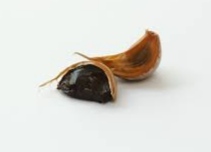
Evaluation of physicochemical, bioactive, and sensory properties in the production of black garlic (Allium sativum L.)
Keywords:
sensory acceptability; fermented garlic; black garlic; phenolic compounds.Abstract
Currently the health benefits provided by the consumption of garlic are known, however, there is a part of the population that dislikes its consumption mainly due to digestive and taste discomfort. In this sense, postharvest processes have been designed in garlic to modify its undesirable sensory properties and provide benefit value; such is the case of the production of black garlic (AN). The objective was to standardize AN production in the Chonajos company, and to evaluate its physicochemical properties, phenolic compounds, and sensory acceptance. Three different temperature curves were evaluated to obtain AN. Through a sensory test, temperature curve No 2 was chosen, which showed the greatest acceptability in the panelists and was used as the AN standardization process. During standardization process, the content of Total Soluble Solids (TSS), pH, color, and Total Phenolic Compounds (CFT) were evaluated. The results of the standardization of the AN obtaining process provide 8.49±0.27 mEAG/g BS of CFT, with 51.56° Brix of SST, and pH of 3.44; In addition, the AN acquired the characteristic color of the product, and therefore a decrease in the CIEL*a*b* parameters respect to AF. As for the sensory analysis, a sweet taste and creamy texture were described in AN compared to fresh garlic (AF). It is concluded that the AN standardization process allows obtaining a product with better nutraceutical qualities and greater sensory acceptability respect to AF.
References
1. Alpizar Martínez, V.L., Mariezcurrena Berasain, M.A., Arzate Serrano, D., & Vega Castillo, L.F. (2020). “Estudio comparativo in vitro de la inhibición bacteriana del ajo elefante (Allium ampeloprasum complex) y ajo negro (Allium sativum) sobre Escherichia coli ATCC® 25922”. Tesis de Licenciatura para obtener el grado de Médico Veterinario Zootecnista. Universidad Autónoma del Estado de México, 1-46. http://hdl.handle.net/20.500.11799/109930
2. White, D. (2021). “Healthy Uses for Garlic”. Nursing Clinics of North America, 56(1), 153-156. DOI: https://doi.org/10.1016/j.cnur.2020.12.001
3. Tsai, C. W., Chen, H. W., Sheen, L. Y., & Lii, C. K. (2012). “Garlic: Health benefits and actions”. BioMedicine, 2(1), 17-29. DOI: https://doi.org/10.1016/j.biomed.2011.12.002
4. Maza, M. G., Ibañez, G. G., Hernández, J. C. M., & Dopico, A. C. (2017). “Revisión bibliográfica sobre el uso terapéutico del ajo”. Revista cubana de medicina física y rehabilitación, 6(1), 61-71.
5. Toledano Medina, M.A., Pérez Aparicio, J., & Moreno Rojas, R. (2017). “Optimización del proceso de elaboración y caracterización fisiológica, físico-química del ajo negro”. Tesis doctoral. Universidad de Córdoba UCOPress. 1-141. http://hdl.handle.net/10396/15111
6. Estalles, M.M. (2020). Tesis: “Bases para la elaboración de protocolos para la obtención de ajo negro con cultivares INTA de ajo (Allium sativum), y caracterización organoléptica, físico–química y nutracéutica”. Universidad Nacional de Cuyo, Argentina.
7. Andreo-Martínez, P., García-Martínez, N., & Navarro-González, I. (2021). “Efectos de la ingesta de ajo negro en el cerebro: Una revisión sistemática”. Revista de Discapacidad, Clínica y Neurociencias. ISSN 2341-2526. Vol. 8, Núm. 1. pp. 1-13. DOI: https:/doi.org/10.14198/DCN.19486
8. Aires da Silva, D., Moreira Ferreira, J., Moreira Lima, B., Figueiredo Viana, L.B., Melo Aires, G.C. (2021). “Evaluation of processing in phenolic compounds and antioxidante capacity in black garlic (Allium sativum)”. Congreso Internacional de la Agroindústria “Inovação, Gestão e Sustentabilidade na Agroindústria”. DOI: https://doi.org/10.31692/IICIAGRO.0267
9. Hue, C. T., Tan, L. Q., Van Hung, H., Le, Q. T. N., Nguyen, T. H., Huong, N. T. L., Ha, N.M & Trinh, D. K. (2022). “Assessment of the physicochemical properties and biological activity of Vietnamese single-bulb black garlic”. Food Bioscience, 101866.
10. Wu, J., Jin, Y., & Zhang, M. (2021). “Evaluation on the physicochemical and digestive properties of melanoidin from black garlic and their antioxidant activities in vitro”. Food chemistry, 340, 127934.
11. Kimura, S., Tung, Y.C., Pan, M.H., Su, N.W., Lai, Y.J., & Cheng, K.C. (2017). “Black garlic: A critical review of its production, bioactivity, and application”. Journal of Food and Drug Analysis. Volume 25, Issue 1, pp 62-70. ISSN 1021-9498. DOI: https://doi.org/10.1016/j.jfda.2016.11.003.
12. Cuzco Cusco, M.M. & Ortiz Rodas, P.E. (2019). “Obtención del ajo negro por reacción de Maillard para el desarrollo de productos culinarios y su aplicación en cocina innovadora”. Universidad De Cuenca, Ecuador. 1-160. http://dspace.ucuenca.edu.ec/handle/123456789/33657
13. Ryu, J. H., & Kang, D. (2017). “Physicochemical properties, biological activity, health benefits, and general limitations of aged black garlic: A review”. Molecules, 22(6), 919. DOI: https://doi.org/10.3390/molecules22060919
14. Singleton, V. L., Orthofer, R., & Lamuela-Raventós, R. M. (1999). “[14] Analysis of total phenols and other oxidation substrates and antioxidants by means of folin-ciocalteu reagent”. In Methods in enzymology (Vol. 299, pp. 152-178). Academic press.