Antimicrobial Effects of Ethanol Extracts from Uncaria tomentosa, Haematoxylum brasiletto, and Cymbopogon citratus on Multidrug-Resistant Clinical Strains
Keywords:
Multidrug-resistant, Plant extract, Antibacterial potential.Abstract
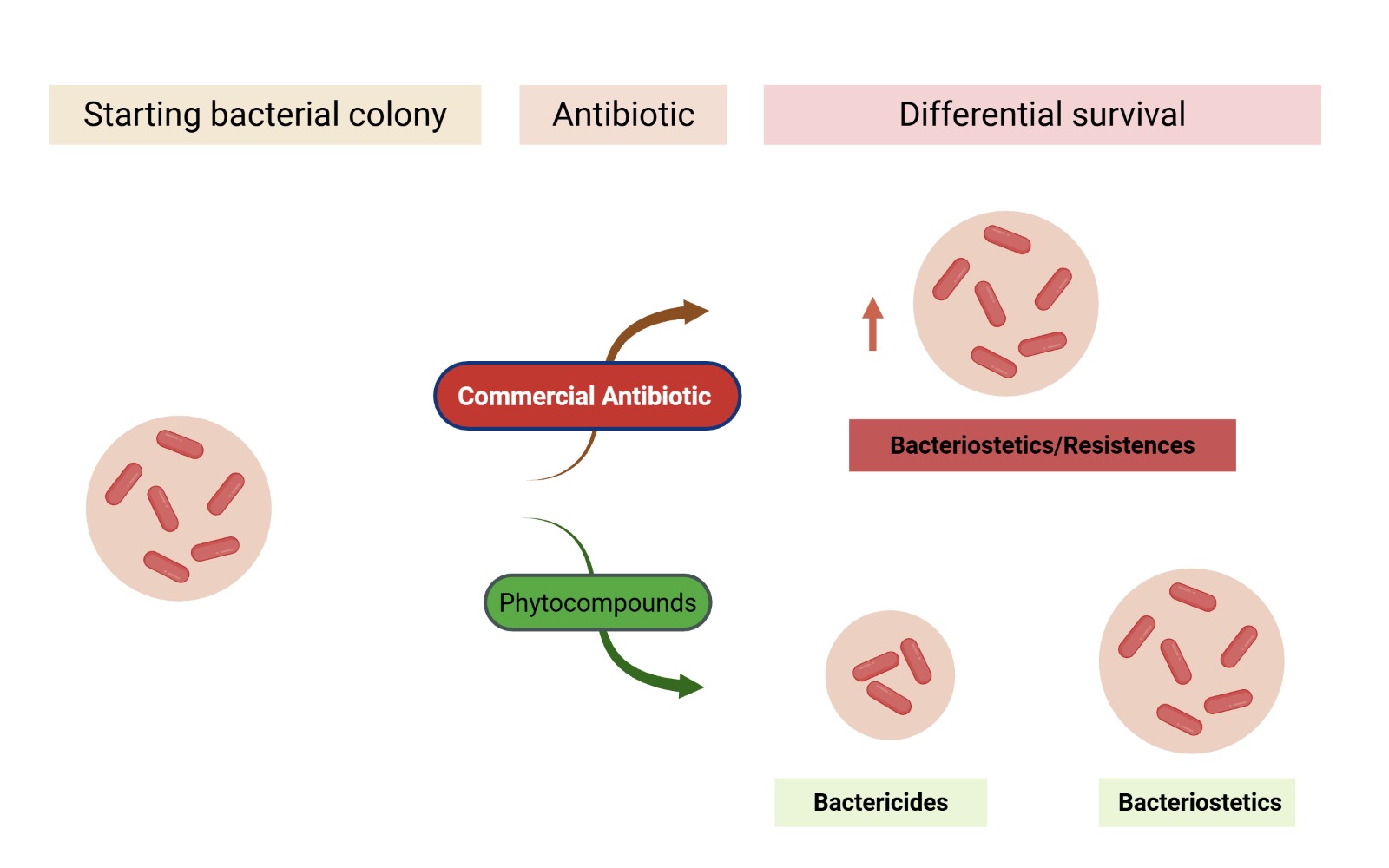
Background: Antimicrobial resistance represents one of the most significant threats to global health and development. According to the World Health Organization (WHO), bacterial resistance was directly responsible for 1.27 million deaths worldwide in 2019. Consequently, the pharmaceutical industry has renewed its interest in natural products and their potential application in the search for more effective drugs to combat human diseases. This study aimed to determine the antimicrobial activity of three ethanolic plant extracts—Brazilwood (Haematoxylum brasiletto), cat's claw (Uncaria tomentosa), and lemongrass (Cymbopogon citratus)—against multidrug-resistant bacteria. Methods: Biological activity was determined following the M26-A protocol of the Clinical and Laboratory Standards Institute (CLSI). Results: Growth inhibition was observed for H. brasiletto (50 mg/mL) against Gram-positive bacteria, such as S. aureus ATCC BAA-44, using agar diffusion and microdilution methods, with a minimum inhibitory concentration (MIC) of 6.25 mg/mL and an inhibition zone of 31 mm in diameter. Similarly, P. aeruginosa 27853, E. faecalis 29212, and A. baumannii 27853 showed inhibition at concentrations of 12.5 mg/mL and 6.25 mg/mL, respectively, with inhibition zone diameters of 12 mm, 21 mm, and 16 mm, respectively. U. tomentosa exhibited bacteriostatic activity, reducing the bacterial population to a few typical pathogen colonies at a concentration of 200 mg/mL. C. citratus did not demonstrate bactericidal or bacteriostatic activity against the bacteria under study. Antimicrobial susceptibility testing performed on reference strains (ATCC) revealed resistance to most antibiotics but susceptibility to ciprofloxacin. Conclusion: Based on the results obtained, medicinal plant extracts are recommended as alternatives for treatment and/or as adjuvants for infectious diseases caused by multidrug-resistant strains.
References
Alvis, A., Martínez, W., & Arrazola, G. (2012). Obtención de Extractos Hidro-Alcohólicos de Limoncillo (Cymbopogon citratus) como Antioxidante Natural. Información Tecnológica, 23(2), 3–10. https://doi.org/10.4067/S0718-07642012000200002
Aouadi, A., Saoud, D. H., Rebiai, A., Abd El-Mordy, F. M., Laouini, S. E., Achouri, A., Mustafa, Y. A. A., Hadjadj, S., & Mustafa, A. A. (2024). Impact of different extraction solvents and concentrations on the total phenolics content and bioactivity of the Algerian lemongrass (Cymbopogon citratus) extracts. Ovidius University Annals of Chemistry, 35(1), 16–26. https://doi.org/10.2478/auoc-2024-0003
Arip, M., Selvaraja, M., Mogana, R., Tan, L. F., Leong, M. Y., Tan, P. L., Yap, V. L., Chinnapan, S., Tat, N. C., Abdullah, M., Dharmendra, K., & Jubair, N. (2022). Review on Plant-Based Management in Combating Antimicrobial Resistance - Mechanistic Perspective. Frontiers in Pharmacology, 13(September), 1–23. https://doi.org/10.3389/fphar.2022.879495
Chaachouay, N., & Zidane, L. (2024). Plant-Derived Natural Products: A Source for Drug Discovery and Development. Drugs and Drug Candidates, 3(1), 184–207. https://doi.org/10.3390/ddc3010011
Chan, Y. T., Wang, N., Tan, H. Y., Li, S., & Feng, Y. (2020). Targeting Hepatic Stellate Cells for the Treatment of Liver Fibrosis by Natural Products: Is It the Dawning of a New Era? In Frontiers in Pharmacology (Vol. 11). Frontiers Media S.A. https://doi.org/10.3389/fphar.2020.00548
Deng, X., Ratnayake, J., & Ali, A. (2025). Curcumin-Loaded Drug Delivery Systems for Acute and Chronic Wound Management: A Review. Bioengineering, 12(8), 860. https://doi.org/10.3390/bioengineering12080860
Fu, Y. S., Chen, T. H., Weng, L., Huang, L., Lai, D., & Weng, C. F. (2021). Pharmacological properties and underlying mechanisms of curcumin and prospects in medicinal potential. Biomedicine and Pharmacotherapy, 141(June), 111888. https://doi.org/10.1016/j.biopha.2021.111888
Gad, S., Desoqi, M., fawzy, mohammed, Ghourab, M., Hassan, T. H., & elsawy, H. (2024). Focus on Advancements in Amikacin Sulfate Delivery and Safety. Records of Pharmaceutical and Biomedical Sciences, 8(3), 132–143. https://doi.org/10.21608/rpbs.2024.308403.1312
García-Hernández, D. G., Pawlukiewicz, A. J., & Villarreal-Ibarra, E. C. (2025). Plants as a Friendly and Emerging Alternative for Disease Management in Humans. In Natural Alternatives and Nanotechnology Applied to the One Health Approach (pp. 107–113). Springer Nature Switzerland. https://doi.org/10.1007/978-3-032-03675-9_6
Gómez-Aguilar, A., & Beltrán-Rodríguez, L. (2025). Palo Brasil Haematoxylum brasiletto H. Karst. Revista Etnobiología, 23, 113–118.
González, M. del R. G., Gutiérrez, M. L. Y., & Gonzalez-Santiago, O. (2022). Efecto antimicrobiano de los extractos metanólicos de corteza de Haematoxylum brasiletto. Revista de Ciencias Farmaceúticas y Biomedicina, 4(1), 26–29.
Heredia, N., Escobar, M., Rodríguez-Padilla, C., & García, S. (2005). Extracts of Haematoxylon brasiletto inhibit growth, verotoxin production, and adhesion of enterohemorrhagic Escherichia coli O157:H7 to HeLa cells. Journal of Food Protection, 68(7), 1346–1351. https://doi.org/10.4315/0362-028X-68.7.1346
Khwaza, V., Mlala, S., & Aderibigbe, B. A. (2024). Advancements in Synthetic Strategies and Biological Effects of Ciprofloxacin Derivatives: A Review. International Journal of Molecular Sciences, 25(9), 4919. https://doi.org/10.3390/ijms25094919
M26A. (1999). M26-A Methods for Determining Bactericidal Activity of Antimicrobial Agents; Approved Guideline This document provides procedures for determining the lethal activity of antimicrobial agents. September.
Marques, O., Figueirinha, A., Pina, M. E., & Batista, M. T. (2025). Uncaria tomentosa as a Promising Natural Source of Molecules with Multiple Activities: Review of Its Ethnomedicinal Uses, Phytochemistry and Pharmacology. International Journal of Molecular Sciences, 26(14), 6758. https://doi.org/10.3390/ijms26146758
Martini, M. C., Zhang, T., Williams, J. T., Abramovitch, R. B., Weathers, P. J., & Shell, S. S. (2020). Artemisia annua and Artemisia afra extracts exhibit strong bactericidal activity against Mycobacterium tuberculosis. Journal of Ethnopharmacology, 262(July), 113191. https://doi.org/10.1016/j.jep.2020.113191
Mora Saavedra, L. F. (2024). EVALUACIÓN ANTIMICROBIANA E IDENTIFICACIÓN PARCIAL DE MOLÉCULAS BIOACTIVAS DE Salvia rosmarinus SPENN. (1835), Haematoxylum brasiletto H. KARST. (1862) Y Ocimum basilicum L. (1753) SOBRE BACTERIAS PATÓGENAS EN LA PRODUCCIÓN DE Oreochromis niloticus L. (1758). [Tesis de Maestría]. Universidad Autónoma de Nuevo León.
Nayeem, A., S, A. S., Vellapandian, C., Singh, S., Elossaily, G. M., & Prajapati, B. G. (2024). Comprehensive Insights into Cephalosporins: Spectrum, Generations, and Clinical Applications. Current Drug Therapy, 20. https://doi.org/10.2174/0115748855339119241204071146
Obrzut, O., Gostyńska-Stawna, A., Kustrzyńska, K., Stawny, M., & Krajka-Kuźniak, V. (2025). Curcumin: A Natural Warrior Against Inflammatory Liver Diseases. Nutrients, 17(8), 1373. https://doi.org/10.3390/nu17081373
Roesch, C., Ashraf, K., Vantaux, A., Marin, A. A., Maher, S. P., Franetich, J.-F., Kloeung, N., Ke, S., Vo, H. T. M., Barale, J.-C., Mazier, D., & Witkowski, B. (2025). Assessment of the in vitro activity and selectivity of Artemisia afra and Artemisia annua aqueous extracts against artemisinin-resistant Plasmodium falciparum. Malaria Journal, 24(1), 150. https://doi.org/10.1186/s12936-025-05375-w
Rojas, J., Velasco, J., Buitrago, A., Mender, T., & Rojas, J. (2016). Evaluacion de la actividad antimicrobiana de plantas medicinales seleccionadas del Jardin Botanico del Orinoco, municipio Heres, Estado Bolivar. Revista de la Facultad de Farmacia, 58, 2+.
Sankar Sangeetha, V., & Saravanakumar Padmavathi, Y. (2025). Artemisia annua: Illuminating the Spectrum of Pharmacological Wonders. Food and Drug Safety, 2(1), 40–53. https://doi.org/10.55121/fds.v2i1.421
Semenova, M. N., Kuptsova, T. S., & Semenov, V. V. (2024). Toxicity of organic solvents and surfactants to the sea urchin embryos. Chemosphere, 353, 141589. https://doi.org/10.1016/j.chemosphere.2024.141589
Sun, J., Xufeng, J., Qiu, Z., Gao, Q., Zhu, Z., He, J., Gao, S., & Sui, X. (2025). Artemisiae Annuae Herba: from anti-malarial legacy to emerging anti-cancer potential. Theranostics, 15(15), 7346–7377. https://doi.org/10.7150/thno.115414
Tazi, A., El Moujahed, S., Jaouad, N., Saghrouchni, H., Al-Ashkar, I., Liu, L., & Errachidi, F. (2024). Exploring the Bioactive Potential of Moroccan Lemon Grass (Cymbopogon citratus L.): Investigations on Molecular Weight Distribution and Antioxidant and Antimicrobial Potentials. Molecules, 29(17), 3982. https://doi.org/10.3390/molecules29173982
Vaou, N., Stavropoulou, E., Voidarou, C., Tsigalou, C., & Bezirtzoglou, E. (2021). Towards advances in medicinal plant antimicrobial activity: A review study on challenges and future perspectives. Microorganisms, 9(10), 1–28. https://doi.org/10.3390/microorganisms9102041
Vashisth, D., & Mishra, S. (2025). Unlocking the potential of Artemisia annua for artemisinin production: current insights and emerging strategies. 3 Biotech, 15(6), 164. https://doi.org/10.1007/s13205-025-04332-3
Verde-Star, M. J., García-González, S., & Rivas-Morales, C. (2016). Metodología científica para el estudio de plantas medicinales. In Investigación en plantas de importancia médica (pp. 1–40). OmniaScience. https://doi.org/10.3926/oms.335
Villarreal, J. P. V., Medina Soto, B. A., Heya, M. S., Galindo-Rodríguez, S. A., Velázquez, U. C., Cárdenas Noriega, K. A., & García-Ponce, R. (2024). Phytotherapeutic potential of Artemisia ludoviciana and Cordia boissieri extracts against the dermatophyte Microsporum canis. Journal of Veterinary Research (Poland). https://doi.org/10.2478/jvetres-2024-0046
WHO. (2024, May 17). WHO updates list of drug-resistant bacteria most threatening to human health. Https://Www.Who.Int/News/Item/17-05-2024-Who-Updates-List-of-Drug-Resistant-Bacteria-Most-Threatening-to-Human-Health.
Xu, F., Shan, X., Li, J., Li, J., Yuan, J., Zou, D., & Wang, M. (2025). The plant matrix of Artemisia annua L. for the treatment of malaria: Pharmacodynamic and pharmacokinetic studies. PLOS One, 20(5), e0322835. https://doi.org/10.1371/journal.pone.0322835
Yasunaka, K., Abe, F., Nagayama, A., Okabe, H., Lozada-Pérez, L., López-Villafranco, E., Muñiz, E. E., Aguilar, A., & Reyes-Chilpa, R. (2005). Antibacterial activity of crude extracts from Mexican medicinal plants and purified coumarins and xanthones. Journal of Ethnopharmacology, 97(2), 293–299. https://doi.org/10.1016/j.jep.2004.11.014