An interactive didactic tool using Arduino and fuzzy logic for teaching systems of linear equations in Excel
Keywords:
Educational Technology, Teaching material, Mathematics, Educational Informatics.Abstract
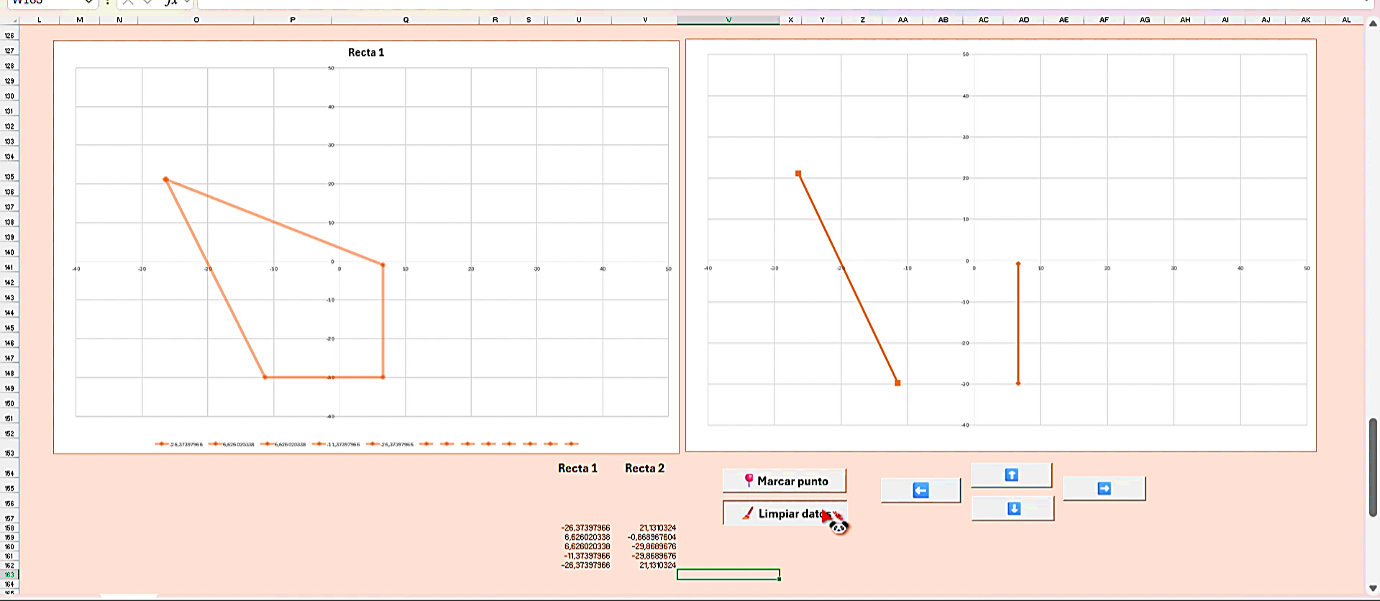
The teaching of systems of linear equations in engineering presents challenges due to the complexity of these concepts and their limited connection to practical applications. To address this issue, this study proposes an interactive interface that integrates Arduino, fuzzy logic, and Excel to enhance understanding through dynamic and visual learning experiences. Accordingly, an interactive didactic tool was developed in which an Arduino microcontroller captures analog signals from potentiometers in real time and transmits them to Excel through Data Streamer and VBA macros. These signals are used to plot two lines in parallel with a zero-order type-1 Sugeno fuzzy logic system, which processes and stabilizes the readings, managing the uncertainty inherent in low-cost hardware.
The interface allows students to visualize variations in the x and y parameters of linear equations by physically manipulating the potentiometers. The results show that the system enabled real-time representation of variations in the linear equation parameters while maintaining a latency below 100 ms during data transmission and visualization. Furthermore, validation performed in MATLAB demonstrated agreement between the values calculated by the fuzzy system and those obtained in Excel: a digital input of 195, a scaled value of 0.95308 V, and an output of 33.27°. Fuzzy logic improves signal stability by reducing fluctuations and provides reliable results for real-time representation.
References
[1] Díaz Barriga, A. F., & Hernández Rojas, G. (2002). Estrategias docentes para un aprendizaje significativo: una interpretación constructivista (McGraw Hill, Ed.; Tercera). McGraw-Hill. https://es.scribd.com/document/561472490/Estrategias-Docentes-Para-Un-Aprendizaje-Significativo-Una-Interpretacion-Constructivista
[2] Secretaría de Educación Pública. (2016). Álgebra Lineal. Secretaría Académica, de Investigación e Innovación. TecNM.
[3] Becerril Vilchis, F., Campero Carmona, A. C., & López Solís, F. (2019). Programa de estudios álgebra lineal. UAEMEX.
[4] Piñón Jiménez, A., & Córdova Esparza, D. M. (2023). Systematic Review: State of Knowledge on Learning Difficulties and Teaching Strategies in Linear Algebra. International Congress on Education and Technology in Sciences. https://doi.org/DOI:10.19153/cleiej.28.2.11
[5] Tashtoush, M., Wardat, Y., Al-Shannaq, M., AlAli, R., Saleh, S., & AL-Saud, K. (2023). Conceptual Understanding for Systems of Linear Equations: Difficulties and Challenges. Information Sciences Letters, 12(12), 2491–2503. https://doi.org/http://dx.doi.org/10.18576/isl/121210
[6] Rangel Ruiz, L., Roa Fuentes, S., & García Torres, E. (2026). La teoría APOE y la Enseñanza del Álgebra Lineal: Comprensión de los Sistemas de Ecuaciones Lineales y su Conjunto de Solución en Estudiantes de Ingeniería. Innovaciencia, 14(1). https://doi.org/10.15649/2346075X.5861
[7] Wong, Jacqueline., Papageorgiou, E., Klaassen, R., Van der Wal, N., Menschaart, L., & Cabo, A. J. (2022). Research on mathematical competencies in engineering education: where are we now? Sefi 2022 - 50th Annual Conference of the European Society for Engineering Education, Proceedings, 1815–1828. https://doi.org/10.5821/conference-9788412322262.13100
[8] Jara Ulloa, F. J., & Casillas Alcalá, M. T. (2024). Efecto del uso e integración de dispositivos móviles y recursos educativos digitales en Matemáticas con estudiantes de Ingeniería. European Public & Social Innovation Review, 10, 1–15. https://doi.org/https://doi.org/10.31637/epsir-2025-298
[9] Costa, V. A., & Rossignoli, R. (2017). Enseñanza del algebra lineal en una facultad de ingeniería: Aspectos metodológicos y didácticos. Revista Educación En Ingeniería, 12(23), 49. https://doi.org/https://doi.org/10.26507/rei.v12n23.734
[10] Gamboa, R. (2007). “Uso de la tecnología en la enseñanza de las matemáticas.” CORE, 3, 11–44. https://core.ac.uk/outputs/333874981/?utm_source=pdf&utm_medium=banner&utm_campaign=pdf-decoration-v1
[11] Ponce Silva, N. E. (2017). La enseñanza y aprendizaje del álgebra lineal para estudiantes de la carrera de ingeniería civil de la universidad laica “eloy alfaro” de manabí. REFCALE: Revista Electrónica Formación y Calidad Educativa. ISSN 1390-9010, 5(3), 29–38. https://refcale.uleam.edu.ec/index.php/refcale/article/view/1537
[12] Salas-Rueda, R. A. (2019). Modelo TPACK: ¿Medio para innovar el proceso educativo considerando la ciencia de datos y el aprendizaje automático? Entreciencias: Diálogos En La Sociedad Del Conocimiento, 7(19), 51–66. https://doi.org/10.22201/ENESL.20078064E.2018.19.67511
[13] Zarzar Charur, C. (2015). Instrumentación didáctica por competencias (Primera edición). Grupo Editorial Patria. https://books.google.es/books?id=2UTJDgAAQBAJ&printsec=frontcover&hl=es#v=onepage&q&f=false
[14] Navaridas Nalda, F. (2004). Estrategias didácticas en el aula universitaria. In Universidad de La Rioja. Universidad de La Rioja. https://dialnet.unirioja.es/servlet/libro?codigo=59764&info=resumen&idioma=SPA
[15] Zarzar Charur, C. (2000). La Didáctica Grupal (1.a edición). Editorial Progreso, S.A. de C.V. https://books.google.com.mx/books?id=V3T4etphMm4C&printsec=frontcover&hl=es#v=onepage&q&f=false
[16] Palencia González, F. J., & García Llamas, M. C. (2017). Análisis y representación gráfica de funciones matemáticas con Excel. Anales de ASEPUMA, (25).
[18] Ruiz Ledezma, E. R., Acosta-Magallanes, F., & Valero-Cázarez, D. M. S. (2022). Aproximación Interdisciplinar STEM con Recursos Tecnológicos para el Tratamiento de Conceptos de Física y Matemáticas. Cultura Científica y Tecnológica, 19(2), E13–E22. https://doi.org/10.20983/CULCYT.2022.2.2E.2
[19] Jimenez, A., & Lahuerta, A. (2022). Analysis of the relationship between students’ proficiency level and their ability to identify figurative language. Ibérica, (43), 179–204. https://doi.org/10.17398/2340-2784.43.179
[20] Du, C. J., & Sun, D. W. (2008). Object Classification Methods. Computer Vision Technology for Food Quality Evaluation, 81–107. https://doi.org/10.1016/B978-012373642-0.50007-7
[21] Morales Luna, G. (2002). Introducción a la lógica difusa. Centro de Investigación y de Estudios Avanzados Del IPN (CINVESTAV).
[22] Zadeh, L. A. (1965). Fuzzy sets. Information and Control, 8(3), 338–353. https://doi.org/10.1016/S0019-9958(65)90241-X
[23] Rasúa López, M. (2003). Microsoft Excel en la solución de problemas de Algebra Lineal. Pedagogía Universitaria, 8(3), 26+. https://link.gale.com/apps/doc/A146892136/IFME?u=anon~8d08459a&
[24] Aguirre Manríquez, I. V, García Guzmán, M. Á., Razón González, J. P., & Cano Lara, M. (2022). Basic operation of rotary potentiometer A, B, C and W. Journal of Innovative Engineering, 6(19), 1–5. https://doi.org/10.35429/JOIE.2022.19.6.1.5
[25] Aspiazu Hidalgo, S. F., Macay García, D. C., Castro Villacreses, V. H., Blacio Medina, S. L., & López Polo, J. R. (2024). El Acceso a Materiales Educativos Actualizados Sobre Tecnología en el Ámbito de la Educación. Ciencia Latina Revista Científica Multidisciplinar, 8(5), 1437–1459. https://doi.org/10.37811/CL_RCM.V8I5.13610
[26] Piaget, Jean. (1977). La explicación en las ciencias. 22. https://es.scribd.com/document/258182732/Piaget-Jean-Et-Al-1977-La-Explicacion-en-Las-Ciencias
[27] Schunk, D. H. (2012). Teorías del aprendizaje: Una perspectiva educativa (6.a edición). Pearson Educación de México. https://hdl.handle.net/20.500.14330/PER01000366815
[28] Hernández Sampieri, R., Fernádez Collado, C., & Baptista Lucio, M. D. P. (2014). Metodología de la investigación. In Metodología de la investigación (6th ed.). McGraw Hill España. https://dialnet.unirioja.es/servlet/libro?codigo=775008&info=resumen&idioma=SPA
[29] Vidal Silva, C., Lineros, M. I., Uribe, G. E., & Olmos, C. J. (2019). Electrónica para Todos con el Uso de Arduino: Experiencias Positivas en la Implementación de Soluciones Hardware-Software. Information Technologic, 30(6), 377–386. https://doi.org/10.4067/S0718-07642019000600377
[30] MathWorks. (n.d.). Analyze fuzzy system using Fuzzy Logic Designer. MathWorks Documentation. Retrieved April 9, 2026, from https://la.mathworks.com/help/fuzzy/analyze-fuzzy-system-using-fuzzy-logic-designer.html
[31] Castañeda Barbarán, M. del C. (2020). Implementación del Algoritmo de Control Lógica Difusa en robot detector de obstáculo utilizando la robótica con tecnología ARDUINO. Emprendimiento Científico Tecnológico, 1(2020). https://orcid.org/0000-0002-7130-9131