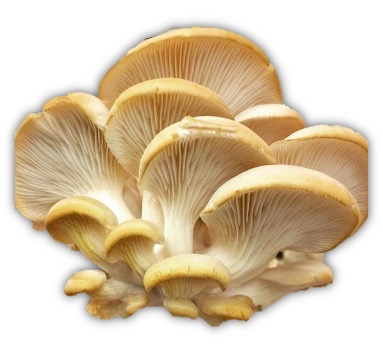
Development of wheat bread enriched with Pleurotus ostreatus flour using its enzyme extract
Keywords:
Edible fungus, Flour, Pleurotus ostreatus, Wheat bread.Abstract
Baking technology has evolved with the aim of increasing the quality of products. For this reason, in this study, formulations enriched with edible mushroom flour (Pleurotus ostreatus) and enzymatic extracts were evaluated as ingredients to improve sensory characteristics in the preparation of the dough and obtain beneficial products for the consumer (functional bread). Amylolytic enzymes are among the most widely used ingredients, since they improve the sensory qualities of bread and increase its shelf life. The edible mushroom Pleurotus ostreatus (Po) is a source of high biological value protein, rich in fiber (β-glucans), vitamins and minerals. In addition, it has bioactive compounds with immunomodulatory activity, hypoglycemic and prebiotic effects that can benefit people at risk or suffering from a chronic disease. The aim of the present work has to evaluate the effect of the enzyme extract in conjunction with Po flour to improve the sensory, nutritional and physicochemical characteristics of an enriched wheat bread. First, Po flour was obtained and its nutritional characteristics were evaluated, then bread formulations were developed substituting 5, 10, 15 and 20% of the wheat flour with Po flour, in addition to the formulation without Po as a control. Finally, the addition of 5% of enzyme extract with amylases activity of 3896 UE · L-1, previously obtained by fermentation using Pleurotus ostreatus in solid state with wheat straw as a substrate was evaluated. The proximal analysis of Po powder and bread formulations was performed according to the standardized AOAC methods. The results showed that Po flour is a source of essential nutrients including protein (22.3 g / 100 g), fiber (5.5 g / 100g) and minerals (9.9 g / 100g), in addition to carbohydrates (60.3 g / 100g) and low lipid content (1.9 g / 100g). The addition of 20% Po flour in the formulations resulted in significant (p> 0.05) increases in fiber content of bread (0.00 to 2.26 g / 100g). The addition of enzyme the volume of the bread. These results indicate that Po and its enzyme extract can be used as an alternative ingredient to enrich the nutritional value and quality of wheat bread.
References
1. Zhou W, Therdthai N, Hui YH. (2014). ¨Introduction to Baking and Bakery Products¨ . Bakery Products Science and Technology, John Wiley & Sons, Ltd. https://doi.org/10.1002/9781118792001
2. Cardoso RVC, Fernandes Â, Gonzaléz-Paramás AM, Barros L, Ferreira ICFR. (2019). ¨Flour fortification for nutritional and health improvement: A review¨. Food Research International. 125: 108576. doi: 10.1016/j.foodres.2019.108576.
3. Li D, Zhao Y, Fei T, Wang Y, Lee BH, Shim JH, Zu B, Li Z & Li Z. (2019). ¨Effects of Streptococcus thermophilus GtfB enzyme on dough rheology, bread quality and starch digestibility¨. Food Hydrocolloids. 96:134–9. https://doi.org/10.1016/j.foodhyd.2019.05.009.
4. Calle J, Benavent-Gil Y, Rosell CM. (2020). ¨Development of gluten free breads from Colocasia esculenta flour blended with hydrocolloids and enzymes¨. Food Hydrocolloids. 98:105243. https://doi.org/10.1016/j.foodhyd.2019.105243.
5. Oliveira DS, Telis-Romero J, Da-Silva R, Franco CML. (2014). ¨Effect of a Thermoascus aurantiacus thermostable enzyme cocktail on wheat bread quality¨. Food Chemistry. 143:139–46. http://dx.doi.org/10.1016/j.foodchem.2013.07.103.
6. Md. Asaduzzaman Khan & Mousumi Tania. (2012).¨Nutritional and Medicinal Importance of Pleurotus Mushrooms: An Overview¨. Food Reviews International. 28(3): 313-329. https://doi.org/10.1080/87559129.2011.637267
7. Akila SRV, Mishra S, Hardacre A, Matia-Merino L, Goh K, Warren F & Monro J. (2019). ¨Kernel structure in breads reduces in vitro starch digestion rate and estimated glycaemic potency only at high grain inclusion rates¨. Food Structure. 21:100109. https://doi.org/10.1016/j.foostr.2019.100109.
8. Roman L & Martinez MM. (2019). ¨Structural Basis of Resistant Starch (RS) in Bread: Natural and Commercial Alternatives¨. Foods. 8:267. https://www.mdpi.com/2304-8158/8/7/267.
9. Proserpio C, Pagliarini E, Laureati M, Frigerio B, Lavelli V. (2019). ¨Acceptance of a new food enriched in β-glucans among adolescents: Effects of food technology neophobia and healthy food habits¨. Foods; 8(10). https://doi.org/10.3390/foods8100433
10. Szakály Z, Kovács S, Pető K, Huszka P, Kiss M. (2019). ¨A modified model of the willingness to pay for functional foods¨. Appetite;138:94–101.
11. Wai A, Yeung K, Mocan A, Atanasov AG. (2018). ¨Let food be thy medicine and medicine be thy food : A bibliometric analysis of the most cited papers focusing on nutraceuticals and functional foods¨. Food Chemistry. 269:455–65. https://doi.org/10.1016/j.foodchem.2018.06.139
12. Chen Y, Zhao L, He T, Ou Z, Hu Z, Wang K. (2019). ¨Effects of mango peel powder on starch digestion and quality characteristics of bread¨. International Journal Biological Macromoleculas. 140:647–52. https://doi.org/10.1016/j.ijbiomac.2019.08.188
13. Millar KA, Barry-Ryan C, Burke R, McCarthy S, Gallagher E. (2019). ¨Dough properties and baking characteristics of white bread, as affected by addition of raw, germinated and toasted pea flour¨. Innovative Food Science & Emerging Technologies. 56:102189. DOI: 10.1016/j.ifset.2019.102189.
14. Liguori G, Gentile C, Gaglio R, Perrone A, Guarcello R, Francesca N, (2019). ¨Effect of addition of Opuntia fi cus-indica mucilage on the biological leavening , physical , nutritional , antioxidant and sensory aspects of bread¨. Journal of Bioscience and Bioengineering. 126 (2): 184-191. https://doi.org/10.1016/j.jbiosc.2019.08.009
15. Ma G, Yang W, Zhao L, Pei F, Fang D, Hu Q. (2018). ¨A critical review on the health promoting effects of mushrooms nutraceuticals¨. Food Science and Human Wellness. 7(2):125–33. https://doi.org/10.1016/j.fshw.2018.05.002.
16. Kim S, Lee JW, Heo Y, Moon B. (2016). ¨Effect of Pleurotus eryngii Mushroom β-Glucan on Quality Characteristics of Common Wheat Pasta¨. Journal of Food Science. 81(4):C835–40. DOI: 10.1111/1750-3841.13249
17. Khider M, Elbanna K, Seoudi O, El-Fakharany A. (2015). ¨Lactic acid fermented permeates and mushroom powder (Pleurotus ostreatus Hk 35) for improvement of the nutritional value and quality of pan bread¨. International Journal of Current Microbiology and Applied Sciences. 4(8):723–36.
18. Zhang Y, Ruan C, Cheng Z, Zhou Y, Liang J. (2019). ¨Mixolab behavior, quality attributes and antioxidant capacity of breads incorporated with Agaricus bisporus¨. Journal of Food Science and Technology. 56(8): 3921–9. https://doi.org/10.1007/s13197-019-03859-7.
19. Kalač P. (2016). ¨Edible Mushrooms: Chemical composition and nutritional value¨. Academic Press. Elsevier. https://linkinghub.elsevier.com/retrieve/pii/C20150004713.
20. Bellettini MB, Fiorda FA, Maieves HA, Teixeira GL, Ávila S, Hornung PS, et al. (2019). ¨Factors affecting mushroom Pleurotus spp¨. Saudi Journal of Biological Sciences. 26(4): 633–46. doi: 10.1016/j.sjbs.2016.12.005
21. González-Colunga, A.A., Sigala-Laguna, S.S., Tapia-Solís, M., Cruz, M., Rodríguez-Jasso R.M., Loredo, A. , Contreras-Esquivel, J.C. and Belmares, R. (2021). ¨Efecto de diferentes sustratos sobre la cinética enzimática de Pleurotus ostreatus¨. Revista Internacional de Investigación e Innovación Tecnológica. 9(49):20-39.
22. Carrasco-González JA, Serna-Saldívar SO, Gutiérrez-Uribe JA. (2017). ¨Nutritional composition and nutraceutical properties of the Pleurotus fruiting bodies: Potencial use as food ingredient¨. Journal of Food Composition of Analysis. 58:69–81. http://dx.doi.org/10.1016/j.jfca.2017.01.016.
23. Vetvicka V, Gover O, Karpovsky M, Hayby H, Danay O, Ezov N. (2019). ¨Immune-modulating activities of glucans extracted from Pleurotus ostreatus and Pleurotus eryngii ¨. Journal od Functional Foods. 54:81–91. https://doi.org/10.1016/j.jff.2018.12.034.
24. Synytsya A, Míčková K, Synytsya A, Jablonský I, Spěváček J, Erban V. (2009). ¨Glucans from fruit bodies of cultivated mushrooms Pleurotus ostreatus and Pleurotus eryngii: Structure and potential prebiotic activity¨. Carbohydrate Polymers. 76(4): 548–56. https://doi.org/10.1016/j.carbpol.2008.11.021
25. Nweze CC, Rasaq NO, Istifanus BI. (2020). ¨Effect of Agaricus bisponus and Pleurotus ostreatus mixed diet on Alloxan-induced hyperglycemic rats¨. Scince African. 7:e00209. https://doi.org/10.1016/j.sciaf.2019.e00209.
26. Bonatti-Chaves M, Soares H, Furlan SA. (2004). ¨Evaluation of Pleurotus ostreatus and Pleurotus sajor-caju nutritional characteristics when cultivated in different lignocellulosic wastes¨. Food Chemistry. 88(3): 425-428. DOI:10.1016/j.foodchem.2004.01.050
27. M. A. Cruz-Hernández, A. C. Ríos-Sánchez, F. Morales-Luna, M. Flores-Verastegui, M. E. Castelo-Mejia, and R. Belmares-Cerda. (2019). “Evaluación de la producción de enzimas celulolíticas utilizando Pleurotus ostreatus” Av. Investig. En Inocuidad Aliment. 2: 5–11.
28. Miller GL. (1959). Use of Dinitrosalicylic Acid Reagent for Determination of Reducing Sugar. Anal Chem. 31(3): 426–8.
29. A.O.A.C. 2000. ¨Official Methods of Analysis¨. Association of Official Analytica Chemist. EUA.
30. Rasalanavho M, Moodley R, Jonnalagadda SB. (2020). ¨Elemental bioaccumulation and nutritional value of five species of wild growing mushrooms from South Africa¨. Food Chemitry. 319: 126596. https://doi.org/10.1016/j.foodchem.2020.126596
31. Khan MA, Tania M. (2012). ¨Nutritional and Medicinal Importance of Pleurotus Mushrooms: An Overview¨. Food Reviews International. 28(3): 313–29. DOI:10.1080/87559129.2011.637267
32. Fernandes Â, Barros L, Martins A, Herbert P, Ferreira ICFR. (2015). ¨Nutritional characterisation of Pleurotus ostreatus (Jacq. ex Fr.) P. Kumm. produced using paper scraps as substrate¨. Food Chemitry. 169:396–400. DOI: 10.1016/j.foodchem.2014.08.027
33. Corrêa RCG, Brugnari T, Bracht A, Peralta RM, Ferreira ICFR. (2016). ¨Biotechnological, nutritional and therapeutic uses of Pleurotus spp. (Oyster mushroom) related with its chemical composition: A review on the past decade findings¨. Trends in Food Science and Technology. 50:103–17. DOI:10.1016/J.TIFS.2016.01.012
34. Frakolaki G, Giannou V, Topakas E, Tzia C. (2018). ¨Chemical characterization and breadmaking potential of spelt versus wheat flour¨. Journal of Cereal Science. 79:50–6. https://doi.org/10.1016/j.jcs.2017.08.023.
35. Wang J, Hasanalieva G, Wood L, Anagnostopoulos C, Ampadogiannis G, Bempelou E. (2020). ¨Effect of wheat species (Triticum aestivum vs T. spelta), farming system (organic vs conventional) and flour type (wholegrain vs white) on composition of wheat flour – results of a retail survey in the UK and Germany - 3. Pesticide residue content¨. Food Chemistry X 26:100089. https://doi.org/10.1016/j.fochx.2020.100091.
36. Alam N, Amin R, Khan A, Ara I, Shim MJ, Lee MW. (2008). ¨Nutritional Analysis of Cultivated Mushrooms in Bangladesh - Pleurotus ostreatus, Pleurotus sajor-caju , Pleurotus florida and Calocybe indica¨. Mycobiology. 36(4): 228-232. doi: 10.4489/MYCO.2008.36.4.228
37. Bach F, Helm CV, Bellettini MB, Maciel GM, Haminiuk CWI. (2017). ¨Edible mushrooms: a potential source of essential amino acids, glucans and minerals¨. International Journal of Food Science and Technology. 52(11): 2382–9235. DOI:10.1111/ijfs.13522
38. Wang S, Xu F, Li Z, Zhao S, Song S, Rong C. (2015). ¨The spent mushroom substrates of Hypsizigus marmoreus can be an effective component for growing the oyster mushroom Pleurotus ostreatus¨. Sci Hortic. 186:217–22. http://dx.doi.org/10.1016/j.scienta.2015.02.028.
39. Kayode RMO, Olakulehin TF, Adedeji BS, Ahmed O, Aliyu TH, Badmos AHA. (2015). ¨Evaluation of amino acid and fatty acid profiles of commercially cultivated oyster mushroom (Pleurotus sajor-caju) grown on gmelina wood waste¨. Niger Food Journal. 33(1): 18–21. http://dx.doi.org/10.1016/j.nifoj.2015.04.001.
40. Manzi P, Gambelli L, Marconi S, Vivanti V, Pizzoferrato L. (1999). ¨Nutrients in edible mushrooms: An inter-species comparative study¨. Food Chemistry. 65(4): 477–82. DOI:10.1016/S0308-8146(98)00212-X
41. Guardado-félix D, Lazo-vélez MA, Pérez-carrillo E, Esteban D, Serna-saldívar SO. (2020). ¨Effect of partial replacement of wheat flour with sprouted chickpea flours with or without selenium on physicochemical, sensory, antioxidant and protein quality of yeast-leavened breads¨. LWT-Food Science and Technology. 109517. https://doi.org/10.1016/j.lwt.2020.109517.
42. Adebayo EA, Oloke JK, Azeez MA, Omomowo IO, Bora TC. (2014). ¨Assessment of the genetic diversity among ten genotypes of Pleurotus (oyster mushroom) using nutrient and mineral compositions¨. Scientia Horticulturae. 166:59–64. http://dx.doi.org/10.1016/j.scienta.2013.12.010.
43. Koutrotsios G, Mountzouris KC, Chatzipavlidis I, Zervakis GI. (2014). ¨Bioconversion of lignocellulosic residues by Agrocybe cylindracea and Pleurotus ostreatus mushroom fungi-Assessment of their effect on the final product and spent substrate properties¨. Food Chemistry. 161:127–35. http://dx.doi.org/10.1016/j.foodchem.2014.03.121.
44. Shbeeb DA, Farahat MF, Ismail HM. (2019). ¨Macronutrients analysis of fresh and canned Agaricus bisporus and Pleurotus ostreatus mushroom species sold in Alexandria markets, Egypt¨. Progress in Nutrition. 21(1): 203–9. DOI:10.23751/pn.v21i2-S.6453
45. Lu X, Brennan MA, Serventi L, Liu J, Guan W, Brennan CS. (2018). ¨Addition of mushroom powder to pasta enhances the antioxidant content and modulates the predictive glycaemic response of pasta¨. Food Chemitry. 264:199–209. https://doi.org/10.1016/j.foodchem.2018.04.130.
46. Zhou S, Ma F, Zhang X, Zhang J. (2016). ¨Carbohydrate changes during growth and fruiting in Pleurotus ostreatus¨. Fungal Biology. 120(6): 852–61. http://dx.doi.org/10.1016/j.funbio.2016.03.007.
47. Geng P, Harnly JM, Chen P. (2016). ¨Differentiation of bread made with whole grain and refined wheat (T. aestivum) flour using LC/MS-based chromatographic fingerprinting and chemometric approaches¨. Journal of Food Composition and Analisys. 47:92–100. http://dx.doi.org/10.1016/j.jfca.2015.12.010.
48. J. H. A. Betini, M. Michelin, S. D. C. Peixoto-Nogueira, J. A. Jorge, H. F. Terenzi, and M. L. T. M. Polizeli, “Xylanases from Aspergillus niger, Aspergillus niveus and Aspergillus ochraceous produced under solid-state fermentation and their application in cellulose pulp bleaching,” Bioprocess Biosyst. Eng., vol. 32, no. 6, pp. 819–824, 2009. https://doi.org/10.1007/s00449-009-0308-y
49. V.-C. M.A., G. Mata, and J. M. Savoie, “Waste-reducing cultivation of Pleurotus ostreatus and Pleurotus pulmonarius on coffee pulp: changes in the production of some lignocellulolytic enzymes,” World J. Microbiol. Biotechnol., vol. 18, no. 3, pp. 201–207, 2002. https://doi.org/10.1023/A:1014999616381
50. Struyf N, Verspreet J, Verstrepen KJ, Courtin CM. (2017). ¨Investigating the impact of α-amylase, α-glucosidase and glucoamylase action on yeast-mediated bread dough fermentation and bread sugar levels¨. Journal of Cereals Science. 75:35–44. http://dx.doi.org/10.1016/j.jcs.2017.03.013.
51. Liu W, Brennan MA, Serventi L, Brennan CS. (2017). ¨Effect of cellulase, xylanase and α-amylase combinations on the rheological properties of Chinese steamed bread dough enriched in wheat bran¨. Food Chemistry. 234:93–102. http://dx.doi.org/10.1016/j.foodchem.2017.04.160.
52. Bello M, Oluwamukomi M, Enujiugha V. (2017). ¨Nutrient Composition and Sensory Properties of Biscuit from Mushroom-Wheat Composite Flours¨. Archives of Current Research International. 9(3):1–11. DOI:10.9734/ACRI/2017/35686
53. Rodrigues Barbosa J, dos Santos Freitas MM, da Silva Martins LH, de Carvalho RN. (2020). ¨Polysaccharides of mushroom Pleurotus spp.: New extraction techniques, biological activities and development of new technologies¨. Carbohydrate Polymers. 229:115550. https://doi.org/10.1016/j.carbpol.2019.115550.
54. Lu X, Brennan MA, Serventi L, Liu J, Guan W, Brennan CS. (2018). ¨Addition of mushroom powder to pasta enhances the antioxidant content and modulates the predictive glycaemic response of pasta¨. Food Chemitry. 264:199–209. https://doi.org/10.1016/j.foodchem.2018.04.130.
55. Ng SH, Robert SD, Wan Ahmad WAN, Wan Ishak WR. (2017). ¨Incorporation of dietary fibre-rich oyster mushroom (Pleurotus sajor-caju) powder improves postprandial glycaemic response by interfering with starch granule structure and starch digestibility of biscuit¨. Food Chemitry. 227:358–68. http://dx.doi.org/10.1016/j.foodchem.2017.01.108.