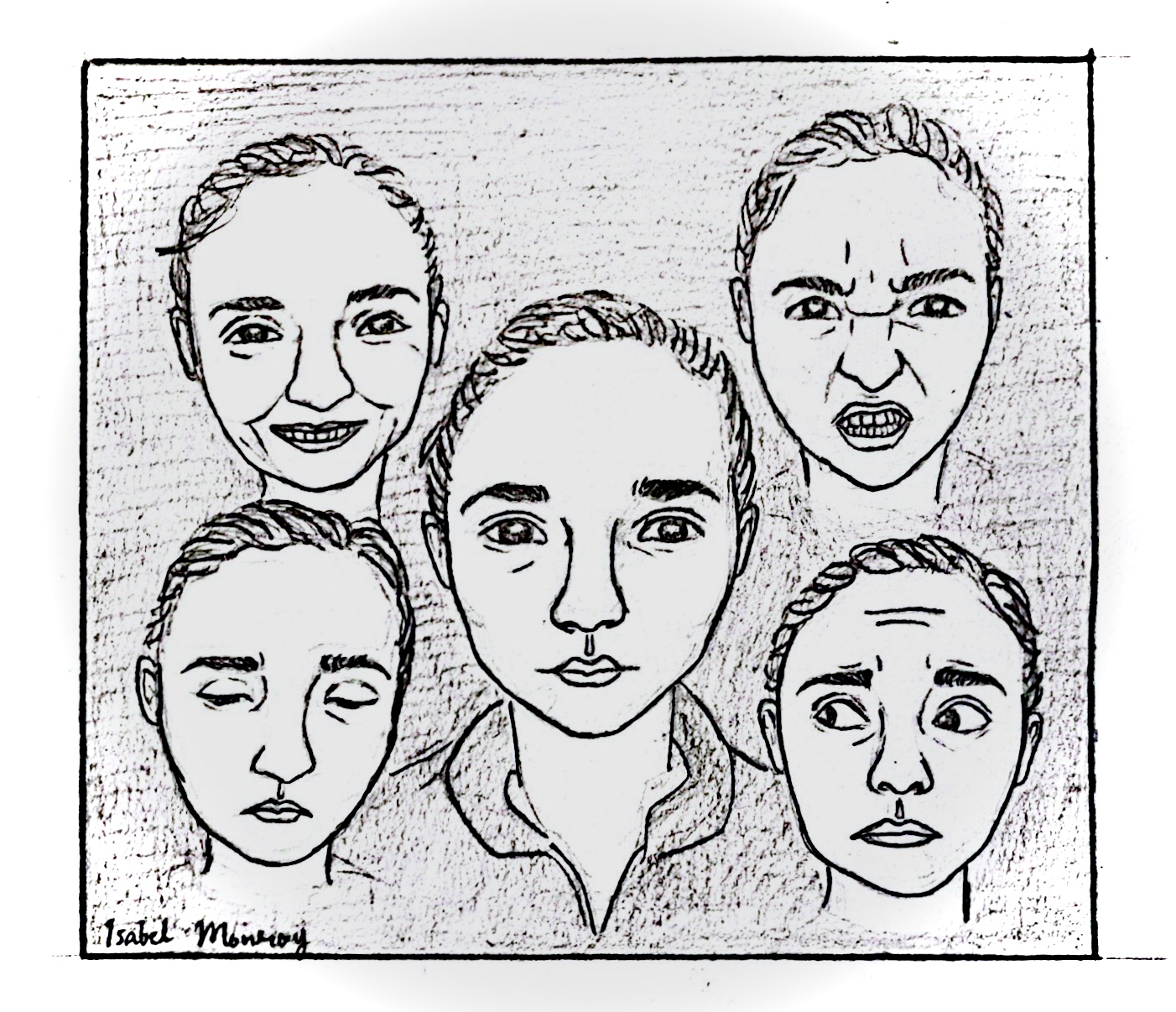
Self-perception of the university student’s emotions on returning to face-to-face activities after the end of voluntary isolation by COVID-19
Keywords:
distance education, emotional state, pandemic, SARS-CoV-2.Abstract
The objective of this work is to determine which are the predominant emotions of the students of the Tecnológico Nacional de México/Instituto Tecnológico de Colima after the return to academic activities during the COVID 19 serving as a basis for the implementation of measures to mitigate the harmful effects of the SARS-CoV-2 pandemic. The intensity of emotions such as joy, sadness, hostility, and anxiety was quantified using the Mood Assessment Scale (EVEA, for its acronym in Spanish), through 16 questions to identify these emotions under an 11-level Likert-type scale ranging from "none" to "overwhelming" intensity. These surveys were assigned every week during the first month of return to face-to-face activities to five groups with different levels of academic progress studying in the humanities and exact sciences. Data collection was carried out through "Google Forms" where the participants chose the level of intensity of 16 questions associated with the four emotions. At the end of the four weeks of sampling, with a total of 288 responses, the database was curated, processed and the results analyzed through the online platform "Google Colab", which allowed different classifications to be made based on gender, level of academic progress, subject studied and teacher who taught the subject. The results showed that, in all groups of students, joy is most frequently identified emotion. However, students who took written assessments for the first time, after social isolation, showed higher intensity of negative emotions, such as hostility and anxiety, than those who were taking a course for the second or third time. When evaluating the temporal evolution of the intensity of emotions between weeks, a statistically significant difference in the joy-anxiety and hostility-sadness relationship of the first compared to the second week of face-to-face activities was observed in most groups. Meanwhile, the emotion correlation test showed that advanced semester students distinguish the mix of positive and negative feelings. These results can be implemented as a niche of opportunity for the incorporation of self-help techniques that allow the identification, and control of emotions that are associated with low academic and social achievement.
References
[1] Van Bavel, J. J., Baicker, K., Boggio, P. S., Capraro, V., Cichocka, A., Cikara, M., ... y Willer, R. (2020). Using social and behavioural science to support COVID-19 pandemic response. Nature human behaviour, 4(5), 460-471. https://www.nature.com/articles/s41562-020-0884-z
[2] Ceberio, M. R. (2021). Contexto y vulnerabilidad en la crisis del COVID-19: emociones y situaciones del durante e interrogantes acerca del después. Ajayu Órgano de Difusión Científica del Departamento de Psicología UCBSP, 19(1), 90-126. https://app.lpz.ucb.edu.bo/Publicaciones/Ajayu/v19n1/v19n1_a04.html
[3] Huarcaya-Victoria, J. (2020). Consideraciones sobre la salud mental en la pandemia de COVID-19. Revista Peruana de Medicina Experimental y Salud Pública, 37(2). https://doi.org/10.17843/rpmesp.2020.372.5419
[4] Ramírez, M. L., y Rodríguez, S. A. (2020). Trayectorias escolares en la educación superior ante la pandemia ¿continuar, interrumpir o desistir?. http://132.248.192.241:8080/jspui/bitstream/IISUE_UNAM/544/1/LopezM_RodriguezS_2020_Trayectorias_escolares.pdf
[5] Orellana-Centeno, J. E., y Guerrero-Sotelo, R. N. (2021). El proceso de vacunación en México. Revista de la Asociación Dental Mexicana, 78(5), 270-274. http://www.scielo.org.ar/pdf/medba/v82n3/1669-9106-medba-82-03-461.pdf
[6] Quispe Limaylla, A. (2013). El uso de la encuesta en las ciencias sociales. Ediciones Díaz de Santos. https://bit.ly/3LzrcEc
[7] Matas, A. (2018). Diseño del formato de escalas tipo Likert: un estado de la cuestión. Revista electrónica de investigación educativa, 20(1), 38-47. https://www.scielo.org.mx/scielo.php?pid=S1607-40412018000100038&script=sci_arttext_plus&tlng=es
[8] Ramírez, J. L. M. (2019). El proceso de elaboración y validación de un instrumento de medición documental. Acción y reflexión educativa, (44), 50-63. https://revistas.up.ac.pa/index.php/accion_reflexion_educativa/article/view/673
[9] Rotundo, G. Z., y Giner, M. T. C. (2008). Propuesta metodológica para la construcción de escalas de medición a partir de una aplicación empírica. Actualidades investigativas en Educación, 8(2). https://revistas.ucr.ac.cr/index.php/aie/article/view/9342
[10] Ávila, A. y Giménez, A., (1991a). Los adjetivos en tareas de evaluación psicológica: Propiedades y valor estimular. Revista de Psicología General y Aplicada, 44, 465-475. https://revistas.ucr.ac.cr/index.php/aie/article/view/9342
[11] Ávila, A. Y Giménez, A., (1991b). Adjectives in psychological assessment tasks: Instruments and applications in the psychology of emotion and personality. Psychological Assessment, 7, 307-331. https://bit.ly/3Tuyj2L
[12] Pueyo, A. (1993). Evaluación del estado de ánimo y de la activación: estado de la cuestión. Aportaciones recientes a la evaluación psicológica, Barcelona: PPU, 283-306. https://dialnet.unirioja.es/servlet/articulo?codigo=5004926
[13] Sanz, J. (2001). Un instrumento para evaluar la eficacia de los procedimientos de inducción de estado de ánimo: “La Escala de Valoración del Estado de Ánimo” (EVEA). Análisis y modificación de conducta, 27, 71- 110. https://dialnet.unirioja.es/servlet/articulo?codigo=5004926
[14] Lubin, B. (1965). Adjective checklists for measurement of depression. Archives of general psychiatry, 12(1), 57-62. https://jamanetwork.com/journals/jamapsychiatry/article-abstract/488695
[15] Spielberger, C., Gorsuch, L., yLushene, E. (1970). Manual for the State-Trait Anxiety Inventory. Palo Alto, CA: Consulting Psychologist Press.
[16] Spielberger, D, Jacobs, R., yCrane, S. (1983). Assessment of anger: The State- Trait Anger Scale. Advances in personality assesment, Hillsdale NJ, 159-187.
[14] Pacheco-Unguetti, A. P., Acosta, A., Marqués, E., y Lupiáñez, J. (2011). Alterations of the attentional networks in patients with anxiety disorders. Journal of Anxiety Disorders, 25, 888-895. https://www.sciencedirect.com/science/article/pii/S0887618511000909
[15] Del Pino-Sedeño, T., Peñate, W., y Bethencourt, J. M. (2010). La escala de valoración del estado de ánimo (EVEA): análisis de la estructura factorial y de la capacidad para detectar cambios en el estado de ánimo. Análisis y modificación de conducta, 36(153-154), 19-32. http://www.uhu.es/publicaciones/ojs/index.php/amc/article/view/1058
[16] Sanz, J., Gutiérrez, S., y García-Vera, M. P. (2014). Propiedades psicométricas de la Escala de Valoración del Estado de Ánimo (EVEA): Una revisión. Ansiedad y estrés, 20(1). http://uhu.es/publicaciones/ojs/index.php/amc/article/view/1058
[17] Elias, G, yParedes, A. (2021). Las finanzas personales bajo el impacto de la Covid-19 en México. Enfoque disciplinario, 6(1), 32-41. http://www.enfoquedisciplinario.org
[18] Flores, M., Cabezuelo, F., y Chalá P. (2022). Las prácticas profesionales de la comunicación y las relaciones públicas de las ONG internacionales ante la crisis del COVID-19: el caso de México. Observatorio (OBS*), 16(2). https://dialnet.unirioja.es/servlet/articulo?codigo=8479867
[19] Lugo-González, I. V., Pérez-Bautista, Y. Y., Becerra-Gálvez, A. L., Fernández-Vega, M., y Reynoso-Erazo, L. (2021). Percepción emocional del COVID-19 en México: estudio comparación entre la fase 1, fase 2 y medios de información. Interacciones, 7, e164. http://www.scielo.org.pe/scielo.php?pid=S2413-44652021000100001&script=sci_arttext
[20] López, J., Rodea G., Vargas, V. Sánchez, A y Martínez, M. Nivel del estado de ánimo en estudiantes universitarios durante el confinamiento por la COVID-19. Revista Electrónica de Psicología de la FES Zaragoza-UNAM, 12(24), 47-54. https://www.zaragoza.unam.mx/wp-content/2022/Publicaciones/revistas/Rev_Elec_Psico/Vol12_No_24/REP12(24)-art5.pdf
[21] Vázquez, M., Delgadillo, J., Pérez, H. Y Cancino R. (2021). Gestión estratégica aplicada en los centros educativos de modalidad presencial ante la pandemia del COVID-19 para la impartición de clases en línea en México: un caso de estudio. Estudios de Administración, 28(1), 182-200. https://revistas.uchile.cl/index.php/EDA/article/view/58234
[22] Arévalo, V., Preciado, B., Corona, E., Jacobo F., Olvera, A. Y Cárdenas E. (2022). COVID-19 y los estragos en la educación superior. Revista de Difusión Científica, Ingeniería y Tecnologías, 16(3), 37-42. https://bit.ly/3FAaYa6
[20] Sanz-Fernández, J. (2001). Un instrumento para evaluar la eficacia de los procedimientos de inducción de estado de ánimo: la Escala de Valoración del Estado de Ánimo (EVEA). Análisis y Modificación de Conducta, 27, 72-110. https://eprints.ucm.es/id/eprint/37320/1/Un%20instrumento%20para%20evaluar%20la%20eficacia%20de%20los%20procedimientos%20de%20inducción%20de%20estado%20de%20ánimo_la%20EVEA.pdf
[21] Provencio-Ortega, M. (2012). Patrones de escaneo visual ante expresiones faciales negativas en personas con creencias persecutorias. (Tesis de Licenciatura, Universidad Complutense de Madrid). https://eprints.ucm.es/id/eprint/17108/
[22] Romero, N. (2012). Memoria auto-referente y autobiográfica en la depresión mayor: factores de vulnerabilidad implicados (Tesis doctoral, Universidad Complutense de Madrid). https://dialnet.unirioja.es/servlet/cittes?codigo=160056
[23] Cronbach, L. J. (1947). Test “reliability”: Its meaning and determination. Psychometrika, 12(1), 1-16. https://link.springer.com/article/10.1007/BF02289289
[24] Borjas-Gil, M. I., y Vilchez-Paz, C. F. (2009). Ciencias" duras" vs. Ciencias" blandas". REDHECS, 7(4), 195-209. http://ojs.urbe.edu/index.php/redhecs/article/view/88
[25] Timarán-Delgado, C. A., Moreno-Portilla, M. I., y Luna-Tascón, E. G. (2011). Construcción y validación de un cuestionario para identificación de factores asociados al desempeño escolar (FADE). Acta Colombiana de Psicología, 14(2), 57-67. http://www.scielo.org.co/scielo.php?script=sci_arttext&pid=S0123-91552011000200006
[26] Smarandache, F. (2008). Alternatives To Pearson’s and Spearman’s Correlation Coefficients. Infinite Study, SSRN Electronic Journal, DOI: 10.2139/ssrn.2725499