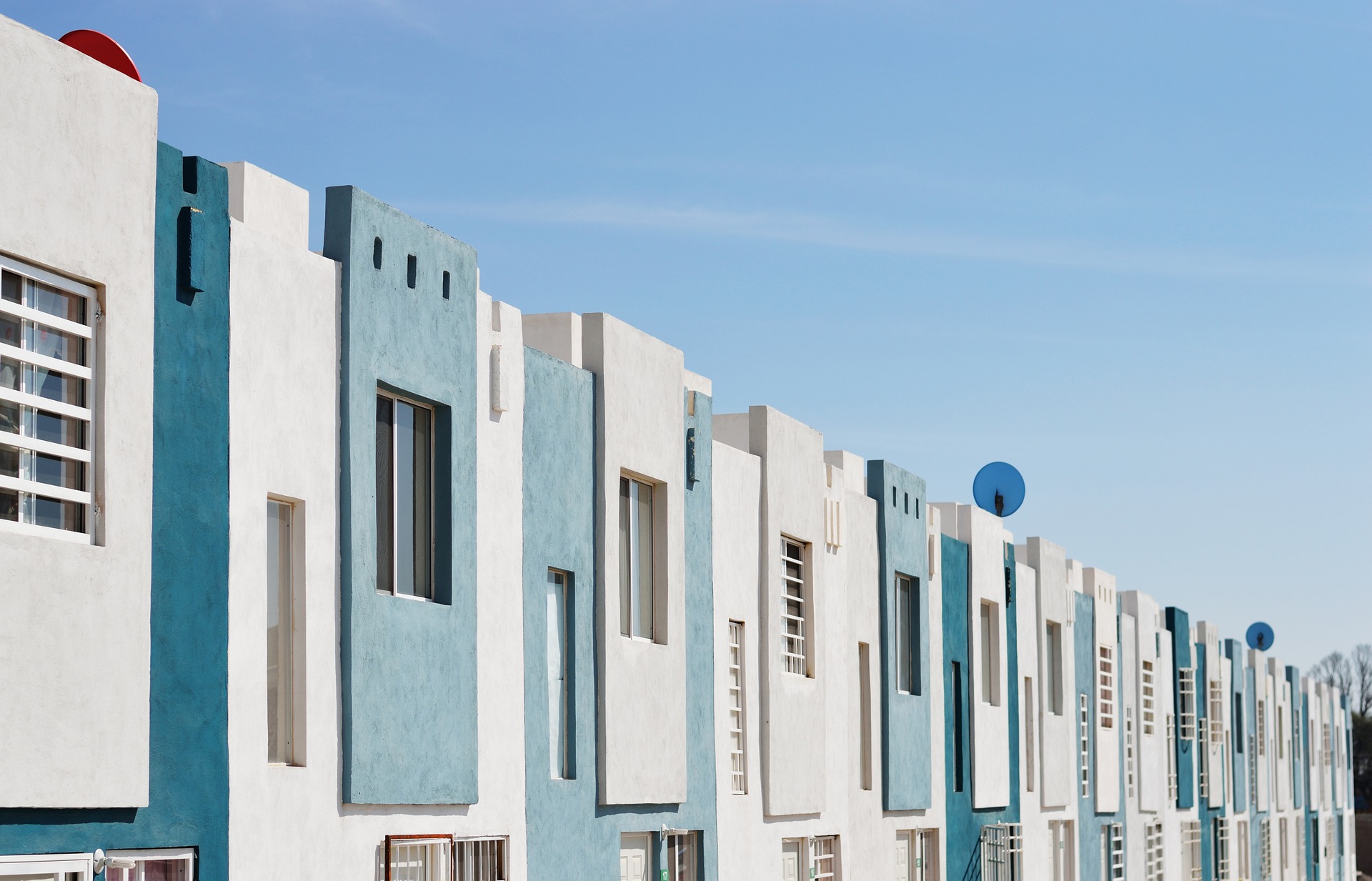
Electricity and gas consumption in housing: case studies in Mexican cities in four climatic regions
Keywords:
cooling, heating, thermal comfort, water heating.Abstract
Mexican families allocate a significant proportion of their income to paying energy bills such as electricity and gas, necessary for the use of electrical appliances, air conditioning, and sanitary water heating. This research discusses the challenges that Mexican families have in paying for the energy required to satisfy their needs for thermal comfort and water heating for sanitary use. Simulations were carried out to quantify the energy required to maintain thermal comfort and heat water for sanitary use in four Mexican cities: Cancún, Quintana Roo with a tropical climate; Hermosillo, Sonora with hot arid; Durango, Durango with a temperate semi-arid, and Puebla, Puebla with a temperate sub-humid climate. Thus, the minimum and maximum average temperatures inside, the monthly bills, and the total annual expenses for energy were calculated. In all the cities, except for Puebla, maximum interior temperatures of 30 °C were reached, while in all the cities except Cancún, indoor temperatures were below 18 °C. Furthermore, it was found that the city that requires more energy to achieve thermal comfort and heat water is Hermosillo (hot-arid climate); however, there is a higher expense in Durango (temperate semi-arid climate). In all cases, water heating represents up to 66% of the energy cost in Mexican homes, with Durango and Puebla being the cities where the greatest amount of energy is required to bathe with hot water. It is also deduced that due to the high monthly expenses for electricity and gas that households need to make, families need to take energy deprivation measures to prioritize food and transportation expenses, putting them at risk of energy poverty. Finally, it is essential to continue taking action to improve the design and construction of Mexican housing, adapt existing regulations and improve the availability of economical and efficient equipment to meet the energy needs of Mexican families.
References
1. Global Alliance for Buildings and Construction GABC. (2020). 2020 Global status report for buildings and construction. Towards a zero-emissions, efficient and resilient buildings and construction sector. https://wedocs.unep.org/bitstream/handle/20.500.11822/34572/GSR_ES.pdf
2. International Energy Agency IEA. (2021). Tracking Buildings 2021. https://www.iea.org/reports/tracking-buildings-2021
3. SENER. (2021). Balance Nacional de Energía 2020. Ciudad de México. Retrieved from https://www.gob.mx/cms/uploads/attachment/file/707654/BALANCE_NACIONAL_ENERGIA_0403.pdf
4. SENER - CONUEE. (2018). Cuadernos de la Conuee. Número 1. Análisis de la evolución del consumo eléctrico del sector residencial entre 1982 y 2017 e impactos de ahorro de energía por políticas públicas. Ciudad de México. https://www.conuee.gob.mx/transparencia/boletines/Cuadernos/cuadernoNo.1revision.pdf
5. Morales-Ramírez, Dionicio, Alvarado-Lagunas, Elías, González Del Ángel, L. J. (2021). Disposición al ahorro de energía eléctrica en los hogares de México. Estudios Demográficos y Urbanos, 36(2), 533–561. https://doi.org/https://doi.org/10.24201/edu.v36i2.2002
6. SEDATU - CONAVI. (2017). Código de Edificación de Vivienda. Ciudad de México. https://www.gob.mx/conavi/documentos/codigo-de-edificacion-de-vivienda-3ra-edicion-2017
7. Registro Único de Vivienda (RUV). (2022). Informe estratégico RUV. Ciudad de México. http://portal.ruv.org.mx/wp-content/uploads/2022/03/InformeEstrategicoRuvMar2022.pdf
8. ONU-Hábitat. (2019). Elementos de una vivienda adecuada. https://www.onuhabitat.org.mx/index.php/elementos-de-una-vivienda-adecuada
9. Berkowitz, Bill, Brownlee, T. (2022). Sección 2. Mejorar la calidad de la vivienda. Caja de Herramientas Comunitarias (Web, pp. 1–19). Kansas: Universidad de Kansas. https://ctb.ku.edu/es/tabla-de-contenidos/implementar/fisico-social-y-medio-ambiente/mejorar-la-calidad-de-la-vivienda/principal
10. INEGI -Instituto Nacional de Estadística Geografía e Informática. (2021). ENIGH E 1-2020 Encuesta nacional de ingresos y gastos de los hogares estacional. Ciudad de México. https://www.inegi.org.mx/contenidos/programas/enigh/est/2020/doc/enigh2020_est_presentacion_resultados.pdf
11. Daniel Howdle - Cable.co.uk. (2022). The price of electricity per kWh in 230 countries. https://www.cable.co.uk/energy/worldwide-pricing/
12. Beltrán Nishizaki, E. (2020). Hacia una justicia energética en México. Un análisis del régimen tarifario del sector eléctrico colombiano y su posible implementación en la República Mexicana. enerLAC Volumen IV. Número 2. ISSN: 2602-8042. Revista de Energía de Latinoamérica y el Caribe, 146–159. Quito, Ecuador. Retrieved from http://enerlac.olade.org
13. Gopal, A. R., Leventis, G., Phadke, A., & de la Rue du Can, S. (2014). Self-financed efficiency incentives: case study of Mexico. Energy Efficiency, 7(5), 865–877. https://doi.org/10.1007/s12053-014-9263-9
14. García Ochoa, R., Avila-Ortega, D. I., & Cravioto, J. (2022). Energy services’ access deprivation in Mexico: A geographic, climatic and social perspective. Energy Policy, 164(January). https://doi.org/10.1016/j.enpol.2022.112822
15. Rosas-Flores, J. A., & Gálvez, D. M. (2010). What goes up: Recent trends in Mexican residential energy use. Energy, 35(6), 2596–2602. https://doi.org/10.1016/j.energy.2010.01.015
16. Hancevic, P. I., & Lopez-Aguilar, J. A. (2019). Energy efficiency programs in the context of increasing block tariffs: The case of residential electricity in Mexico. Energy Policy, 131(January), 320–331. https://doi.org/10.1016/j.enpol.2019.04.015
17. Rosas-Flores, J. A., & Rosas-Flores, D. (2020). Potential energy savings and mitigation of emissions by insulation for residential buildings in Mexico. Energy and Buildings, 209. https://doi.org/10.1016/j.enbuild.2019.109698
18. Oropeza-Pérez, I. (2016). Comparative economic assessment of the energy performance of air-conditioning within the Mexican residential sector. Energy Reports, 2, 147–154. https://doi.org/10.1016/j.egyr.2016.06.002
19. Santillán, O. S., Cedano, K. G., & Martínez, M. (2020). Analysis of energy poverty in 7 Latin American countries using multidimensional energy poverty index. Energies, 13(7). https://doi.org/10.3390/en13071608
20. García-Ochoa, R., & Graizbord, B. (2016a). Caracterización espacial de la pobreza energética en México. Un análisis a escala subnacional. Economía Sociedad y Territorio, 289. https://doi.org/10.22136/est002016465
21. Rosas, J., Sheinbaum, C., & Morillón, D. (2010). The structure of household energy consumption and related CO2 emissions by income group in Mexico. Energy for Sustainable Development, 14(2), 127–133. https://doi.org/10.1016/j.esd.2010.04.002
22. García Ochoa, R., & Graizbord B. (2016b). Privation of energy services in Mexican households: An alternative measure of energy poverty. Energy Research and Social Science, 18, 36–49. https://doi.org/10.1016/j.erss.2016.04.014
23. Instituto Nacional de Estadística y Geografía. (2018). Encuesta Nacional sobre Consumo de Energéticos en Viviendas Particulares ENCEVI: Presentación de Resultados. Ciudad de México. https://www.inegi.org.mx/programas/encevi/2018/
24. Collins, K. J. (1986). Low indoor temperatures and morbidity in the elderly. Age and Ageing, 15(4), 212–220. https://doi.org/https://doi.org/10.1093/ageing/15.4.212
25. Banxico. (2022). Índices de Precios de Energéticos Seleccionados. https://www.banxico.org.mx/TablasWeb/informes-trimestrales/octubre-diciembre-2021/96ACC9C5-5A33-4DB2-9288-09069198B565.html
26. Flores-Larsen, Silvana, Filippín, C. (2021). Energy efficiency, thermal resilience, and health during extreme heat events in low-income housing in Argentina. Energy and Buildings, 231(January 2021), 110576. https://doi.org/https://doi.org/10.1016/j.enbuild.2020.110576
27. Reyes, A. (2021). Revealing the contribution of informal settlements to climate change mitigation in latin america: A case study of Isidro Fabela, Mexico City. Sustainability, 13(21). https://doi.org/10.3390/su132112108
28. U.S. Department of Energy’s (DOE) y National Renewable Energy Laboratory (NREL). EnergyPlus. Retrieved May 10, 2023, from https://energyplus.net/
29. Instituto Nacional de Estadística y Geografía. (2020). Promedio de ocupantes en viviendas particulares habitadas. Ciudad de México. https://www.inegi.org.mx/temas/vivienda/
30. Urban, B., & Gomez, C. (2013). A case for thermostat user models. In BS2013: 13th Conference of International Building Performance Simulation Association (pp. 1483–1490). Chambéry, France. https://www.aivc.org/sites/default/files/p_2337.pdf
31. Lucero-Álvarez, J., Rodríguez-Muñoz, N., & Martín-Domínguez, I. (2016). The Effects of Roof and Wall Insulation on the Energy Costs of Low Income Housing in Mexico. Sustainability, 8(7). https://doi.org/10.3390/su8070590
32. Climate-Data.org. (2022). Climate data for cities worldwide. from https://en.climate-data.org/
33. Instituto Nacional de Estadística y Geografía. (2022). Climatología. Geografía y Medio Ambiente. https://www.inegi.org.mx/temas/climatologia/
34. ANSI/ASHRAE Standard 55–2013. Thermal Environmental Conditions for Human Occupancy. 2013.
35. Alliance for an Energy Efficient Economy AEEE. (2020). Adaptive Thermal Comfort in Sustainable Cooling Solutions. Retrieved May 15, 2023, from https://aeee.in/sharing-posts/adaptive-thermal-comfort-in-sustainable-cooling-solutions/
36. Nicol, J. F., & Humphreys, M. A. (2002). Adaptive thermal comfort and sustainable thermal standards for buildings. Energy and Buildings, 34(6), 563–572. https://doi.org/10.1016/S0378-7788(02)00006-3
37. Barrios, Guillermo, Elías, Pablo, Huelsz, Guadalupe, Rojas, J. (2010). Selección de los materiales de muros y techos para mejorar el confort térmico en edificaciones no climatizadas. I. Marincic Lovriha (Ed.), Estudios Sobre Arquitectura y Urbanismo del Desierto (Vol. III, p. 104). Hermosillo, Sonora: Universidad de Sonora.
38. Diario Oficial de la Federación. NOM-003-ENER-2021, Eficiencia térmica de calentadores de agua para uso doméstico y comercial. Límites, métodos de prueba y etiquetado. (2021). México. https://dof.gob.mx/2021/SENER/SENER_150921.pdf
39. Diario Oficial de la Federación. NOM-008-CNA-1998, Regaderas Empleadas en el Aseo Corporal - Especificaciones y Métodos de Prueba. (1998). México. http://www.conagua.gob.mx/conagua07/contenido/documentos/n8.pdf
40. SMN - CONAGUA. (2022). Resúmenes Mensuales de Temperaturas y Lluvia. https://smn.conagua.gob.mx/es/climatologia/temperaturas-y-lluvias/resumenes-mensuales-de-temperaturas-y-lluvias
41. Morales, L. (2022). Tarifas domésticas CFE 2022: ¿Cómo saber en cuál estoy? https://tarifasdeluz.mx/cfe-tarifas
42. Comisión Federal de Electricidad. (2022). Esquema tarifario vigente. Hogar. https://app.cfe.mx/Aplicaciones/CCFE/Tarifas/TarifasCRECasa/Casa.aspx
43. Comisión Nacional para el Uso Eficiente de la Energía CONUEE. (2017). Costos y beneficios de la norma oficial mexicana para envolvente de edificaciones residenciales (NOM-020-ENER). Ciudad de México. https://www.gob.mx/cms/uploads/attachment/file/234755/Impacto_NOM-020-junio-2017-FINAL.pdf
44. CRE Comisión Reguladora de Energía. (2022). Precios al público del gas LP reportados por los distribuidores. https://www.gob.mx/cre/documentos/precios-al-publico-de-gas-lp-reportados-por-los-distribuidores
45. World Health Organization. (2018). Chapter 5. High indoor temperatures. WHO Housing and Health Guidelines. Geneva, Switzerland. Retrieved May 10, 2023, from https://www.ncbi.nlm.nih.gov/books/NBK535285/
46. Jiang, Y., Wang, Z., Lin, B., & Mumovic, D. (2020). Development of a health data-driven model for a thermal comfort study. Building and Environment, 177(December 2019).