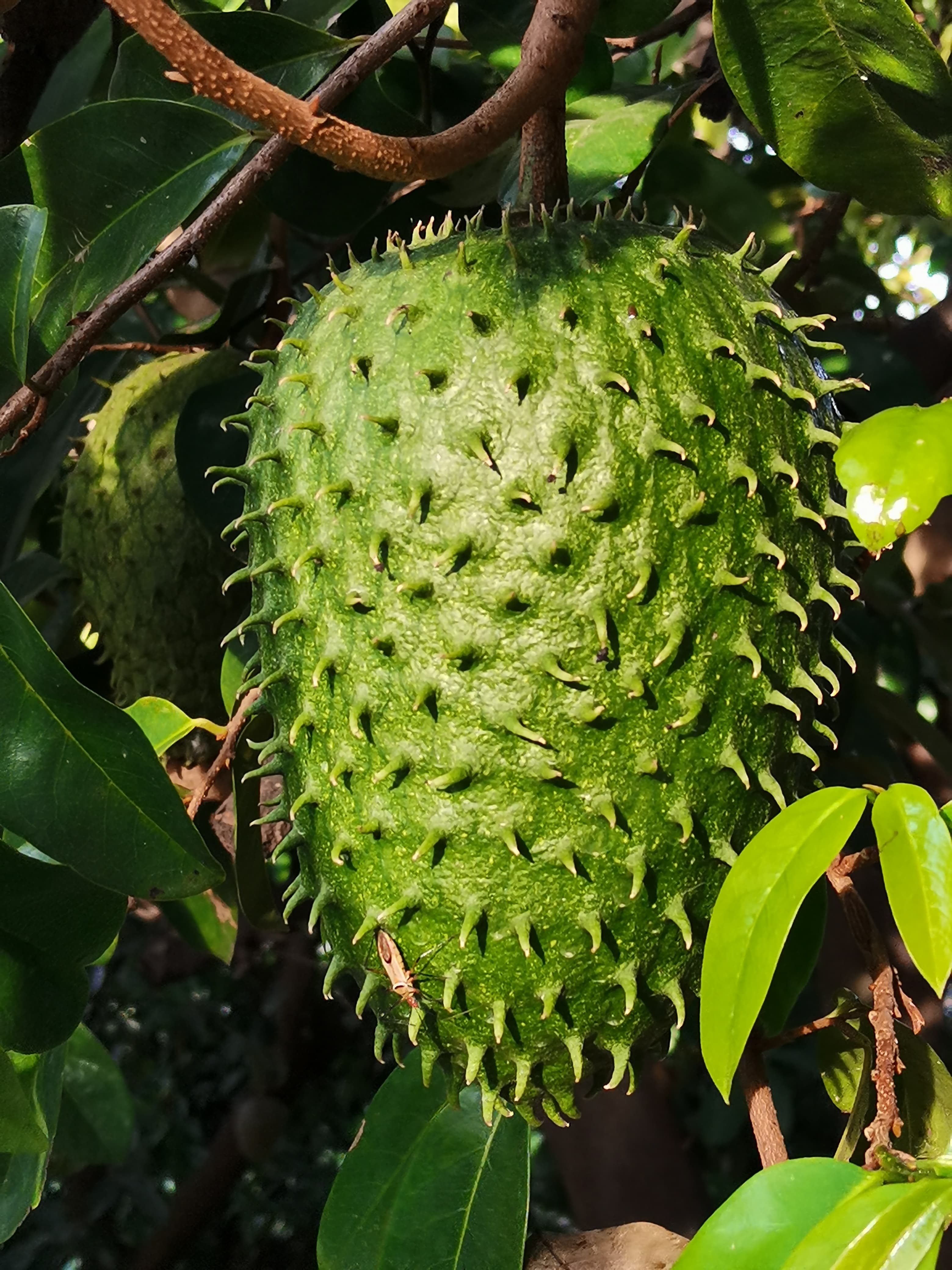
Soursop (Annona muricata L.) seed and peel extracts: phytochemical evaluation
Keywords:
Annonaceae, Ethanol, Methanol, Ultrasound.Abstract
Depending on environmental conditions, plants have developed defense mechanisms such as secondary metabolites for in order to adapt to environmental conditions. Several studies on soursop extracts have reported antimicrobial, antiprotozoal, anti-inflammatory, antioxidant, cytotoxic and insecticidal properties. Therefore, a phytochemical evaluation of soursop peel and seed extracts obtained with methanol at 100 % and 80 %, and ethanol at 96 %, 80 % and 70 % was proposed to be used in alternative methods for the control of fungal diseases in post-harvest, in addition to providing an alternative to the use of soursop fruit residues. Qualitative and quantitative analyses of secondary metabolites were performed by colorimetry for phenols and tannins, flavonoids, quinones, terpenoids, steroids, saponins and alkaloids, and spectrophotometry for total soluble phenols, tannins, flavonoids, chlorophylls, and total carotenoids. The following nomenclature was assigned to each of the extracts obtained: The methanol extracts at 100 and 80 % were assigned MET 100 and MET 80, and the ethanolic extracts at 96, 80 and 70 % were assigned ET 96, ET 80, and ET 70 respectively. For the determination of chlorophyll a, chlorophyll b and total carotenoids, methanol at 100 and 90 % and ethanol at 95 % were used as solvents, assigning MET 100, MET 90 and ET 95 as nomenclature.
A positive qualitative phytochemical screening for phenols, tannins, flavonoids, quinines, steroids, saponins and alkaloids was obtained in peel extracts (MET 100 and 80, ET 96, 80 and 70) while seed extracts (MET 100 and 80, ET 96, 80 and 70) were positive for flavonoids and alkaloids, however, the determination of quinines was negative in these same extracts. ET 70 presented high phenol content (137.96 mg EAG g.p.s.-1) in the soursop peel extract and in the seed sample, ET 80 obtained high phenol content (36.45 mg EAG. g.p.s-1), with a P > 0.05. On the other hand, ET 70 and ET 80 had a high tannin content (62.71 mg EAG.g.p.s.-1) in peel and 22.99 mg EAG.g.p.s.-1 in soursop seed with a P > 0.05. The flavonoid content in the ET 70 extract was 92.69 mg ER g.p.s.-1 in peel and in soursop seed, MET 80 extract, obtained 20.85 mg ER.g.p.s.-1 with a P ≥ 0.05 between the extracts evaluated. Regarding the total chlorophyll content, a high content was obtained in peel (23.79 μg. g-1) when compared to total chlorophyll content in soursop seed (2.46 μg. g-1) presenting a statistical difference (3.48; P ≥ 0.05). As for the content of carotenoids present in soursop peel, the value was 4.67 μg. g-1 while in seed it was 0.41 μg. g-1. In soursop peel extracts (qualitative) with solvent (80 % methanol) the presence of phenols, tannins, flavonoids, quinines, terpenoids, steroids, saponins and alkaloids was detected. Seed extracts (quantitative) with 80 % ethanol and peel with 70 % ethanol showed a high content of total soluble phenols, tannins, and flavonoids. Extracts with high chlorophyll content were shell with 100 % methanol and seed with 90 % methanol, for carotenoids, seed with 95 % ethanol.
References
1. Jiménez-Zurita, J. O., Balois-Morales, R., Alia-Tejacal, I., Juárez-López, P., Jiménez-Ruíz, E. I., Sumaya-Martínez, T. & Bello-Lara, J. E. (2017). Tópicos del manejo postcosecha del fruto de guanábana Annona muricata L. Revista Mexicana de Ciencias Agrícolas, 8(5), 1155–1167. http://www.redalyc.org/articulo.oa?id=263152411012.
2. Flores, R. C., Reyes, L. H., y Guzmán, V. D. H. (2008). Ecología y medio ambiente. Cengage Learning Latin America.
3. Errayes, A., Mohammed, W. & Darwish, M. (2020). Review of Phytochemical and Medical Applications of Annona Muricata Fruits. Journal of Chemical Reviews, 2(1), 70-79. https://doi.org/10.33945/SAMI/JCR.2020.1.5
4. Jiménez-Zurita, J. O., Balois-Morales, R., López-Guzmán, G. G., Palomino-Hermosillo, Y. A. & Bautista-Rosales, P. U. (2023). Guanay-1, Guanay-2 y Guanay-3: nuevas variedades de guanábana para Nayarit. Revista Mexicana de Ciencias Agrícolas, 14(4), 641-646. https://doi.org/10.29312/remexca.v14i4.3098.
5. Servicio de Información Agroalimentaria y Pesquera. (2022). Anuario estadístico de la producción agrícola. https://nube.siap.gob.mx/cierreagricola/.
6. Coria-Téllez, A. V., Montalvo-Gónzalez, E., Yahia, E. M. & Obledo-Vázquez, E. N. (2018). Annona muricata: A comprehensive review on its traditional medicinal uses, phytochemicals, pharmacological activities, mechanisms of action and toxicity. Arabian Journal of Chemistry 11(5), 662–691. https://doi.org/10.1016/j.arabjc.2016.01.004.
7. Abdel-Rahman, T., Hussein, A. S., Beshir, S., Hamed, A. R., Ali, E. & El-Tanany, S. S. (2019). Antimicrobial Activity of Terpenoids Extracted from Annona muricata L. Seeds and its Endophytic Aspergillus niger Strain SH3 Either Singly or in Combination. Open access Macedonian Journal of Medical Sciences, 7(19), 3127–3131. https://doi.org/10.3889/oamjms.2019.793.
8. León-Fernández, A. E., Morales, R. B., Bautista-Rosales, P. U., Palomino-Hermosillo, Y. A., Bello-Lara, J. E. & López-Rivas, C. E. (2021). Extracción de compuestos fitoquímicos de inflorescencia y frutos de guanábana (Annona muricata L.). Acta Agrícola y Pecuaria, 7(1), Article 1. http://aap.uaem.mx/index.php/aap/article/view/269.
9. Corona-Jiménez, E., Martínez-Navarrete, N., Ruiz-Espinosa, H. & Carranza-Concha, J. (2016). Extracción asistida por ultrasonido de compuestos fenólicos de semillas de chía (Salvia hispanica L.) y su actividad antioxidante. Agrociencia 50, 403-412. https://www.scielo.org.mx/scielo.php?script=sci_arttext&pid=S1405-31952016000400403.
10. Nolasco-González, Y., Chacón-López, M. A., Ortiz-Basurto, R. I., Aguilera-Aguirre, S., González-Aguilar, G. A., Rodríguez-Aguayo, C., Navarro-Cortez, M. C., García-Galindo, H.S., García-Magaña, M. de L., Meza-Espinoza, L. & Montalvo-González, E. (2022). Annona muricata Leaves as a Source of Bioactive Compounds: Extraction and Quantification Using Ultrasound. Horticulturae, 8(7), 1-17. http://dx.doi.org/10.3390/horticulturae8070560.
11. Oztekin, S., Dikmetas, D. N., Devecioglu, D., Acar, E. G., & Karbancioglu-Guler, F. (2023). Recent Insights into the Use of Antagonistic Yeasts for Sustainable Biomanagement of Postharvest Pathogenic and Mycotoxigenic Fungi in Fruits with Their Prevention Strategies against Mycotoxins. Journal of Agricultural and Food Chemistry, 71(26), 9923. https://doi.org/10.1021%2Facs.jafc.3c00315.
12. Hernández-Guerrero, S., Balois-Morales, R., Bautista-Rosales, P., Lopez, G., Berumen-Varela, G., Hermosillo, Y. A., Jiménez Zurita, J. O., Bello-Lara, J. & León-Fernández, A. (2020). Identification of Fungal Pathogens of Mango and Soursop Fruits Using Morphological and Molecular Tools and Their Control Using Papaya and Soursop Leaf and Seed Extracts. International Journal of Agronomy, 2020, 1-15. https://doi.org/10.1155/2020/8962328
13. Zavaleta, J., Muñoz, AM, Blanco, T., Alvarado-Ortiz, C., & Loja, B. (2005). Capacidad antioxidante y principales ácidos fenólicos y flavonoides de algunos alimentos. Horizonte Médico, 5 (2), https://www.redalyc.org/articulo.oa?id=371637113004.
14. Harborne, J.B. (1998). Phytochemical Methods. A Guide to Modern Techniques of Plant Analysis. Third edition. Chapman y Hall: London, UK.
15. Sofowara, A. 1993. Medicinal Plants and Traditional Medicine in Africa, Second Edition. John Wiley and Sons Ltd: Ibadan, Nigeria, 191-289.
16. Evans, W. C. (2009) Trease and Evan’s Pharmacognosy. 16th edition. Reino Unido: Elsevier Health Sciences.
17. Maksimovíc, Z., Maleňcíc, D. & Kovǎcevíc, N. (2005). Polyphenol contents and antioxidant activity of Maydis stigma extracts. Bioresource Technology, 96(8), 873–877. https://doi.org/10.1016/j.biortech.2004.09.006.
18. Makkar HP (2003) Quantification of tannins in tree and shrub foliage: a laboratory manual. Springer, New York.
19. Zhishen, J., Mengcheng, T. & Jianming, W. (1999). The determination of flavonoid contents in mulberry and their scavenging effects on superoxide radicals. Food Chemistry, 64, 555-559. http//doi:10.1016/s0308-8146(98)00102-2.
20. Branisa, J., Jenisová, Z., Porubska, M., Jomová, K. & Valko M. (2014). Spectrophotometric determination of chlorophylls and carotenoids. An effect of sonication and sample processing. Journal of Microbiology, Biotechnology and Food Sciences, 3(2), 61-64. https://www.cabdirect.org/cabdirect/abstract/20143095655.
21. Lichtenthaler, H. K. (1987). Chlorophylls and carotenoids: Pigments of photosynthetic biomembranes. Plant Cell Membranes, 34, 350–382. http//doi:10.1016/0076-6879(87)48036-1.
22. Castillo M. L. E. (2011). Introducción al SAS® para Windows. Universidad Autónoma Chapingo. Chapingo, Estado de México. 295 p.
23. Orak, H. H., Bahrisefit, I. S., Sabudak, T. (2019). Antioxidant Activity of Extracts of Soursop (Annona muricata L.) Leaves, Fruit Pulps, Peels, and Seeds. Polish Journal of Food and Nutrition Sciences, 69(4), 359-366. https://doi.org/10.31883/pjfns/112654.
24. Aguilar-Hernández, G., García-Magaña, M. D. L., Vivar-Vera, M. D. L. Á., Sáyago-Ayerdi, S. G., Sánchez-Burgos, J. A., Morales-Castro, J., Anaya-Esparza L. M. & Montalvo González, E. (2019). Optimization of ultrasound-assisted extraction of phenolic compounds from Annona muricata by-products and pulp. Molecules, 24(5), 904. https://doi.org/10.3390/molecules24050904.
25. Dehghanian, Z., Habibi, K., Dehghanian, M., Aliyar, S., Lajayer, B. A., Astatkie, T., Minkina, T., & Keswani, C. (2022). Reinforcing the bulwark: unravelling the efficient applications of plant phenolics and tannins against environmental stresses. Heliyon. 8(2022) e09094. https://doi.org/10.1016/j.heliyon.2022.e09094.
26. Zhou, K., Wang, H., Mei, W., Li, X., Luo, Y., y Dai, H. (2011). Antioxidant activity of papaya seed extracts. Molecules, 16(8), 6179–6192. https://doi.org/10.3390/molecules16086179.
27. Escamilla J. C. I., Cuevas Martínez, E. Y. & Fonseca, J. G. (2009). Flavonoides y sus acciones antioxidantes. In Revista de la Facultad de Medicina UNAM, 52(2), 73-75. https://www.medigraphic.com/pdfs/facmed/un-2009/un092g.pdf.
28. Aguilar-Hernández, G., Zepeda-Vallejo, L. G., García-Magaña, M. D. L., Vivar-Vera, M. D. L. Á., Pérez-Larios, A., Girón-Pérez, M. I., Coria-Tellez, A. E. Rodriguez-Aguayo, C. & Montalvo-González, E. (2020). Extraction of alkaloids using ultrasound from pulp and by-products of soursop fruit (Annona muricata L.). Applied Sciences, 10(14), 4869. https://doi.org/10.3390/app10144869.
29. Dilrikshi M. K. D. T., Dharmadasa R.M., Abeysinghe D. C. & Abhayagunasekara A. V. C. (2020). Selection of Superior Quality Annona Species by Means of Bioactive Compounds and Antioxidant Capacity. World Journal of Agricultural Research, 8(2), 39–44. https://doi.org/10.12691/wjar-8-2-3.
30. Sánchez-Gonzales, G., Castro-Rumiche, C., Álvarez-Guzmán, G., Flores-García, J. & Barriga-Sánchez, M. (2019). Compuestos fenólicos y actividad antioxidante de los extractos de la hoja de chirimoya (Annona cherimola Mill). Revista Colombiana de Química, 48(2), 21-26. http://www.scielo.org.co/scielo.php?pid=S0120-28042019000200021&script=sci_arttext.
31. Anaya-Esparza, L. M., García-Magaña, M. de L., Abraham Domínguez-Ávila, J., Yahia, E. M., Salazar-López, N. J., González-Aguilar, G. A. & Montalvo-González, E. (2020). Annonas: Underutilized species as a potential source of bioactive compounds. Food Research International, 138, 1-18. https://doi.org/10.1016/j.foodres.2020.109775.
32. Peñarrieta, J. M., Tejeda, L., Mollinedo, P., Vila, J. L. & Bravo, J. A. (2014). Compuestos fenólicos y su presencia en alimentos. Revista Boliviana de Química, 31(2), 68-81. https://www.redalyc.org/pdf/4263/426339682006.pdf.
33. Hassanpour, S., MaheriSis, N. & Eshratkhah, B. (2011). Plants and secondary metabolites (Tannins): A Review. International Journal of Forest, Soil and Erosion, 1(1), 47-53. https://www.researchgate.net/publication/216069956_Plants_and_secondary_metabolites_Tannins_A_Review.
34. Manochai, B., Ingkasupart, P., Lee, S. H. & Hong, J. H. (2018). Evaluation of antioxidant activities, total phenolic content (TPC), and total catechin content (TCC) of 10 sugar apple (Annona squamosa L.) cultivar peels grown in Thailand. Food Science and Technology, 1-7. https://doi.org/10.1590/fst.22117.
35. Herrera-Fuentes, I., Quimis-Ponce, K., Sorroza-Rojas, N., García-Larreta, F., Mariscal-Santi, W., & Mariscal-Garcia, R. (2017). Determinación de Taninos y Cumarinas presente en la planta tres filos. Polo del Conocimiento, 2(7), 500-522. http://dx.doi.org/10.23857/pc.v2i7.257.
36. Zárate-Martínez, W., González-Morales, S., Ramírez-Godina, F., Robledo-Olivo, A., & Juárez-Maldonado, A. (2021). Effect of phenolic acids on the antioxidant system of tomato plants (Solanum lycopersicum Mill.). Agronomía Mesoamericana, 32(3), 854-868. http://dx.doi.org/10.15517/am.v32i3.45101.
37. Piffer, A. B. M., Fornaciari, I. M., Zuqui, E., Bolsoni, A. M. H., de Paula Marchiori, J. J., Alves, A. G., de Carvalho, J. R.., Aguiar, L. R., Furno, F. S. P. & de Paula Gomes, M. (2023). Extracts of plant residues from soursop peels in the management of palm red mite. Journal of Entomology and Zoology Studies. 11 (2): 19-24. https://doi.org/10.22271/j.ento.2023.v11.i2a.9168.
38. Esquinca, A. R. G. (2005). La familia Annonaceae en Chiapas y sus metabolitos. Ciencia y tecnología en la frontera, 2(3), 41-45. https://biblat.unam.mx/es/revista/ciencia-y-tecnologia-en-la-frontera/articulo/la-familia-annonaceae-en-chiapas-y-sus-metabolitos.
39. Carranco J. M. E., Calvo C. Ma. de la C., & Pérez-Gil R, F. (2011). Carotenoides y su función antioxidante: Revisión. Archivos Latinoamericanos de Nutrición, 61(3), 233-241. http://ve.scielo.org/scielo.php?script=sci_arttext&pid=S0004-06222011000300001.
40. Arteaga Dalgo, M., Andrade Cuvi, M. J. & Moreno Guerrero Carlota. (2014). Relación del desarrollo del color con el contenido de antocianinas y clorofila en diferentes grados de madurez de mortiño (Vaccinium floribundum). Enfoque UTE, 5(2), 14–28. http://ingenieria.ute.edu.ec/enfoqueute/.
41. Andrade-Cuvi, M. J., Guijarro-Fuertes, M. & Luzcando Figueroa, J. (2021). Evaluación fisicoquímica y antioxidante de naranjilla (Solanum quitoense Lam.) durante la maduración. Revista Iberoamericana de Tecnología Postcosecha, 22(2), 145-164. https://www.redalyc.org/articulo.oa?id=81369610003.
42. Howitt, C. A. & Pogson, B. J. (2006). Carotenoid accumulation and function in seeds and non-green tissues. Plant, Cell and Environment, 29(3), 435–445. https://doi.org/10.1111/j.1365-3040.2005.01492.x
43. Maluf, M. P., Saab, I. N., Wurtzel, E. T. & Sachs, M. M. (1997). The viviparous 12 maize mutant is deficient in abscisic acid, carotenoids, and chlorophyll synthesis. Journal of Experimental Botany, 48(311), 1259–1268. https://academic.oup.com/jxb/article/48/6/1259/654729.
44. Neta, M. T. S. L., de Jesus, M. S., da Silva, J. L. A., Araujo, H. C. S., Sandes, R. D. D., Shanmugam, S., & Narain, N. (2019). Effect of spray drying on bioactive and volatile compounds in soursop (Annona muricata) fruit pulp. Food Research International, 124, 70-77. https://doi.org/10.1016/j.foodres.2018.09.039.