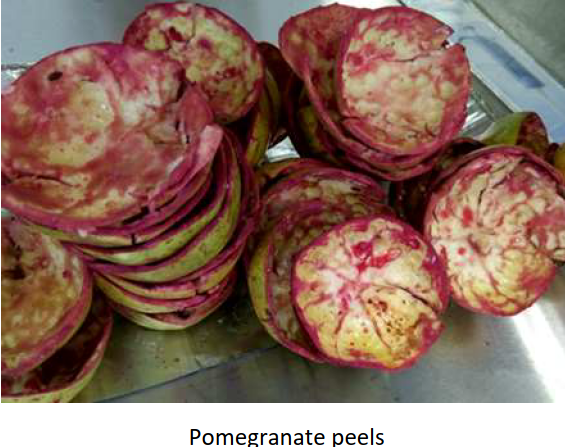
Extracción asistida por ultrasonido/microonda y evaluación de las propiedades funcionales de compuestos bioactivos de cáscara de granada (Punica granatum L.)
Palabras clave:
Tecnologías emergentes, Actividades biológicas, Aplicación industrial.Resumen
La granada (Punica granatum L.), es una fruta tropical y subtropical originaria de Asia que ha sido investigada en los últimos años, debido a los compuestos bioactivos que posee. Se estima que la industria del jugo de granada produce en todo el mundo aproximadamente 1.9 millones de toneladas métricas de cáscara de granada, como residuos agroindustriales, ya que sólo se utilizan los arilos y se deshecha la cáscara, que comprende alrededor del 50% del peso total de la fruta. Este residuo puede utilizarse, debido a que contiene una alta concentración de compuestos fenólicos, los cuales han demostrado poseer alta capacidad antioxidante, entre otras actividades biológicas tales como la antimicrobiana y la antiviral.
En este trabajo se experimentaron tecnologías emergentes como el microondas, el ultrasonido y la tecnología híbrida de ambas técnicas; en la extracción de compuestos bioactivos de la cáscara de granada. Los resultados muestran que la extracción con tecnología híbrida consiguió el mayor contenido polifenólico (377.77 mg GAE/g de cáscara seca de granada). El análisis HPLC/MS/ESI mostró que la punicalagina, la punicalina y el ácido elágico son los compuestos mayoritarios presentes en dicha cáscara. Estos compuestos obtuvieron resultados positivos en los ensayos biológicos, a saber, la actividad antioxidante evaluada por los ensayos de DPPH y ABTS mostraron un resultado favorecedor con un 79.31% y 100%, respectivamente, de capacidad antioxidante. La actividad antimicrobiana con E. coli y Salmonella spp. resultó con diámetros de inhibición de 8.40 y 4.18 mm. También demostró tener un efecto para el estímulo de crecimiento de la bacteria Lactobacillus brevis. Para finalizar, los compuestos fenólicos recuperados de la cáscara de granada no mostraron actividad como resultado de los ensayos de toxicidad celular. Siendo todo este conjunto de resultados favorecedores y prometedores para la fabricación de productos en la industria farmacéutica, alimentaria y cosmética.
Referencias
1. Pareek, S., Valero, D., & Serrano, M. (2015). Postharvest biology and technology of pomegranate. Journal of the Science of Food and Agriculture, 95(12), 2360–2379. https://doi.org/10.1002/jsfa.7069
2. El Barnossi, A., Moussaid, F., & Iraqi Housseini, A. (2021). Tangerine, banana and pomegranate peels valorisation for sustainable environment: A review. Biotechnology Reports, 29, e00574. https://doi.org/10.1016/j.btre.2020.e0057
3. Kahramanoglu, I. (2019). Trends in Pomegranate Sector Production, Postharvest Handling and Marketing. International Journal of Agriculture, Forestry and Life Sciences, 3(2), 239–246.
4. Muñiz-Márquez, D. B., Wong-Paz, J. E., Aguilar-Zárate, P., Sepúlveda, L.,Buenrostro-Figueroa, J., Ascacio-Valdés, J. A., & Aguilar, C. N. (2021). Effect of ultrasound on the extraction of ellagic acid and hydrolysis of ellagitannins from pomegranate husk. Environmental Technology and Innovation, 24, 102063. https://doi.org/10.1016/j.eti.2021.102063
5. Jaiswal, V., DerMarderosian, A., & Porter, J. R. (2010). Anthocyanins and polyphenol oxidase from dried arils of pomegranate (Punica granatum L.). Food Chemistry, 118(1), 11–16. https://doi.org/10.1016/j.foodchem.2009.01.095
6. Zhang, C., Chen, W., Zhang, X., Zheng, Y., Yu, F., Liu, Y., et al. (2017). Grape seed proanthocyanidins induce mitochondrial pathway-mediated apoptosis in human colorectal carcinoma cells. Oncology Letters, 14(5), 5853–5860. https://doi.org/10. 3892/ol.2017.6992
7. Górna, P., & Rudzi, M. (2016). Seeds recovered from industry by-products of nine fruit species with a high potential utility as a source of unconventional oil for biodiesel and cosmetic and pharmaceutical sectors. Industrial Crops and Products 83, 329–338. https://doi.org/10.1016/j.indcrop.2016.01.021
8. Lu, J., Wei, Y., & Yuan, Q. (2007). Preparative separation of punicalagin from pomegranate husk by high-speed countercurrent chromatography. Journal of Chromatography B: Analytical Technologies in the Biomedical and Life Sciences, 857(1), 175–179. https://doi.org/10.1016/j.jchromb.2007.06.038
9. Wu, S., & Tian, L. (2017). Diverse phytochemicals and bioactivities in the ancient fruit and modern functional food pomegranate (punica granatum). Molecules, 22(10). https://doi.org/10.3390/molecules22101606
10. Zhang, L., Fu, Q., & Zhang, Y. (2011). Composition of anthocyanins in pomegranate flowers and their antioxidant activity. Food Chemistry, 127(4), 1444–1449. https://doi.org/10.1016/j.foodchem.2011.01.077
11. Kharchoufi, S., Licciardello, F., Siracusa, L., Muratore, G., Hamdi, M., & Restuccia, C. (2018). Antimicrobial and antioxidant features of ‘Gabsiʼ pomegranate peel extracts. Industrial Crops and Products, 111(October 2016), 345–352. https://doi.org/10.1016/j.indcrop.2017.10.037
12. Al-Megrin, W. A. (2017). In vivo study of pomegranate (Punica granatum) peel extract efficacy against Giardia lamblia in infected experimental mice. Asian Pacific Journal of Tropical Biomedicine, 7(1), 59–63. https://doi.org/10.1016/j.apjtb.2016.08.018
13. Seidi, K., Jahanban-Esfahlan, R., Abasi, M., & Abbasi, M. M. (2016). Anti tumoral properties of Punica granatum (Pomegranate) seed extract in different human cancer cells. Asian Pacific Journal of Cancer Prevention, 17(3), 1119–1122. https://doi.org/10.7314/APJCP.2016.17.3.1119
14. Deng, Y., Li, Y., Yang, F., Zeng, A., Yang, S., Luo, Y., Zhang, Y., Xie, Y., Ye, T., Xia, Y., & Yin, W. (2017). The extract from Punica granatum (pomegranate) peel induces apoptosis and impairs metastasis in prostate cancer cells. Biomedicine and Pharmacotherapy, 93, 976–984. https://doi.org/10.1016/j.biopha.2017.07.008
15. Gumus, Z. P., Ustun Argon, Z., & Celenk, V. U. (2020). Cold pressed pomegranate (Punica granatum) seed oil. In Cold Pressed Oils. Elsevier Inc. https://doi.org/10.1016/b978-0-12-818188-1.00053-0
16. Panichayupakaranant, P., Tewtrakul, S., & Yuenyongsawad, S. (2010). Antibacterial, anti-inflammatory and anti-allergic activities of standardised pomegranate rind extract. Food Chemistry, 123(2), 400–403. https://doi.org/10.1016/j.foodchem.2010.04.054
17. Gulube, Z., & Patel, M. (2016). Effect of Punica granatum on the virulence factors of cariogenic bacteria Streptococcus mutans. Microbial Pathogenesis, 98, 45–49. https://doi.org/10.1016/j.micpath.2016.06.027
18. Rajha, H. N., Koubaa, M., Boussetta, N., Maroun, R. G., Louka, N., Lebovka, N., & Vorobiev, E. (2020). Selective ultrasound-assisted aqueous extraction of polyphenols from pomegranate peels and seeds. Journal of Food Processing andPreservation, 44(7), 1–9. https://doi.org/10.1111/jfpp.14545
19. Ashokkumar, M. (2015). Applications of ultrasound in food and bioprocessing. Ultrasonics Sonochemistry, 25(1), 17–23. https://doi.org/10.1016/j.ultsonch.2014.08.012
20. Hernández-Hernández, C., Aguilar, C. N., Flores-Gallegos, A. C., Sepúlveda, L., Rodríguez-Herrera, R., Morlett-Chávez, J., Govea-Salas, M., & Ascacio-Valdés, J. (2020). Preliminary testing of ultrasound/microwave-assisted extraction (U/M-AE) for the isolation of Geraniin from Nephelium lappaceum L. (Mexican Variety) peel. Processes, 8(5). https://doi.org/10.3390/PR8050572
21. Aguilera-Carbo, A., Augur, C., Prado-Barragan, L. A., Favela-Torres, E., & Aguilar, C. N. (2008). Microbial production of ellagic acid and biodegradation of ellagitannins. Applied Microbiology and Biotechnology, 78(2), 189–199. https://doi.org/10.1007/s00253-007-1276-2
22. Ascacio-Valdés, J. A., Aguilera-Carbó, A. F., Buenrostro, J. J., Prado-Barragán, A., Rodríguez-Herrera, R., & Aguilar, C. N. (2016). The complete biodegradation pathway of ellagitannins by Aspergillus niger in solid-state fermentation. Journal of Basic Microbiology, 56(4), 329–336. https://doi.org/10.1002/jobm.201500557
23. Stämpfli, R., Brühwiler, P., Mourad, S., Verdejo, R., & Shaffer, M. (2007). Development and characterisation of carbon nanotube-reinforced polyurethane foams. EMPA Activities, 26(2007), 51.
24. Molyneux P. (2004). The Use of The Stable Free Radical Diphenylpicryl-
Hydrazyl (DPPH) for Estimating Antioxidant Activity. Songklanakarin Journal of Science and Technology, 26(May), 211–219.
25. Estrada-Gil, L., Contreras-Esquivel, J. C., Flores-Gallegos, C., Zugasti-Cruz, A., Govea-Salas, M., Mata-Gómez, M. A., & Ascacio-Valdés, J. A. (2022). Recovery of bioactive ellagitannins by ultrasound/microwave-assisted extraction from mexican rambutan peel (Nephelium lappaceum L.). Molecules 27, 1592.
26. Venegas-Ortega, M. G., Flores-Gallegos, A. C., Aguilar, C. N., Rodríguez-Herrera, R., Martínez-Hernández, J. L., & Nevárez-Moorillón, G. V. (2020). Multi-functional potential of presumptive lactic acid bacteria isolated from Chihuahua cheese. Foods, 9(3), 1–15. https://doi.org/10.3390/foods9030276
27. Nubi, T., Adewole, T. S., Agunbiade, T. O., Osukoya, O. A., & Kuku, A. (2021). Purification and erythrocyte-membrane perturbing activity of a ketose-specific lectin from Moringa oleifera seeds. Biotechnology Reports, 31(October 2020), e00650. https://doi.org/10.1016/j.btre.2021.e00650
28. Seeram, N., Lee, R., Hardy, M., & Heber, D. (2005). Rapid large-scale purification of ellagitannins from pomegranate husk, a by-product of the commercial juice industry. Separation and Purification Technology, 41(1), 49–55. https://doi.org/10.1016/j.seppur.2004.04.003
29. Ordoñez-Torres, A.; Torres-León, C.; Hernández-Almanza, A.; Flores-Guía, T.; Luque-Contreras, D.; Aguilar, C.N.; Ascacio-Valdés, J. Ultrasound-Microwave-Assisted Extraction of Polyphenolic Compounds from Mexican “Ataulfo” Mango Peels: Antioxidant Potential and Identification by HPLC/ESI/MS. Phytochem. Anal. 2021, 32, 495–502 https://doi.org/10.1002/pca.2997
30. More, P. R., & Arya, S. S. (2021). Intensification of bio-actives extraction from pomegranate peel using pulsed ultrasound: Effect of factors, correlation, optimization and antioxidant bioactivities. Ultrasonics Sonochemistry, 72, 105423. https://doi.org/10.1016/j.ultsonch.2020.105423
31. Lianfu Z, Zelong L. Optimization and comparison of ultrasound/microwave assisted extraction (UMAE) and ultrasonic assisted extraction (UAE) of lycopene from tomatoes. Ultrason Sonochem. 2008;15(5):731-737. https://doi.org/10.1016/j.ultsonch. 2007.12.001
32. Aqil, F., Munagala, R., Vadhanam, M. V., Kausar, H., Jeyabalan, J., Schultz, D. J., & Gupta, R. C. (2012). Anti-proliferative activity and protection against oxidative DNA damage by punicalagin isolated from pomegranate husk. Food Research International, 49(1), 345–353. https://doi.org/10.1016/j.foodres.2012.07.059
33. Sepúlveda, L., Wong-Paz, J. E., Buenrostro-Figueroa, J., Ascacio-Valdés, J. A., Aguilera-Carbó, A., & Aguilar, C. N. (2018). Solid state fermentation of pomegranate husk: Recovery of ellagic acid by SEC and identification of ellagitannins by HPLC/ESI/MS. Food Bioscience, 22(October 2017), 99–104. https://doi.org/10.1016/j.fbio.2018.01.006
34. Gosset-Erard, C., Zhao, M., Lordel-Madeleine, S., & Ennahar, S. (2021). Identification of punicalagin as the bioactive compound behind the antimicrobial activity of pomegranate (Punica granatum L.) peels. Food Chemistry, 352(October 2020), 129396. https://doi.org/10.1016/j.foodchem.2021.129396
35. Kaderides, K., Papaoikonomou, L., Serafim, M., & Goula, A. M. (2019). Microwave-assisted extraction of phenolics from pomegranate peels: Optimization, kinetics, and comparison with ultrasounds extraction. Chemical Engineering and Processing - Process Intensification, 137(November 2018), 1–11. https://doi.org/10.1016/j.cep.2019.01.006
36. Kennas, A., Amellal-Chibane, H., Kessal, F., & Halladj, F. (2020). Effect of pomegranate peel and honey fortification on physicochemical, physical, microbiological and antioxidant properties of yoghurt powder. Journal of the Saudi Society of Agricultural Sciences, 19(1), 99–108. https://doi.org/10.1016/j.jssas.2018.07.001
37. SUN, Y. qing, TAO, X., MEN, X. ming, XU, Z. wei, & WANG, T. (2017). In vitro and in vivo antioxidant activities of three major polyphenolic compounds in pomegranate peel: Ellagic acid, punicalin, and punicalagin. Journal of Integrative Agriculture, 16(8), 1808–1818. https://doi.org/10.1016/S2095-3119(16)61560-5
38. Wang Y, Zhang H, Liang H, Yuan Q. 2013. Purification, antioxidant activity and protein-precipitating capacity of punicalin from pomegranate husk. Food Chemistry, 138, 437–443. DOI: 10.1016/j.foodchem.2012.10.092
39. Pfundstein B, El Desouky S K , Hull W E , Haubner R , Erben G, Owen R W. 2010. Polyphenolic compounds in the fruits of Egyptian medicinal plants (Terminalia ballerica, Terminalia chebula and Terminalia horrida): Characterisation, quantitation and determination of antioxidant capacities. Phytochemistry, 71, 1132–1148. DOI: 10.1016/j.phytochem.2010.03.018
40. Valko, M., Leibfritz, D., Moncol, J., Cronin, M. T. D., Mazur, M., & Telser, J. (2007). Free radicals and antioxidants in normal physiological functions and human disease. International Journal of Biochemistry and Cell Biology, 39(1), 44–84. https://doi.org/10.1016/j.biocel.2006.07.001
41. Diplock, A. T., Charuleux, J.-L., Crozier-Willi, G., Kok, F. J., Rice-Evans, C., Roberfroid, M., Stahl, W., & Viña-Ribes, J. (1998). Functional food science and defence against reactive oxidative species. British Journal of Nutrition, 80(S1), S77–S112. https://doi.org/10.1079/bjn19980106
42. Al-Zoreky, N. S. (2009). Antimicrobial activity of pomegranate (Punica granatum L.) fruit peels. International Journal of Food Microbiology, 134(3), 244–248. https://doi.org/10.1016/j.ijfoodmicro.2009.07.002
43. Khan, J.A. and Hanee, S. (2011). ANTIBACTERIAL PROPERTIES OF PUNICA GRANATUM PEELS. Inter. J. Appli. Biolog. and Pharmaceutic. Technolo. (2): 3.
44. Harini, K., Chandra Mohan, C., Ramya, K., Karthikeyan, S., & Sukumar, M. (2018). Effect of Punica granatum peel extracts on antimicrobial properties in Walnut shell cellulose reinforced Bio-thermoplastic starch films from cashew nut shells. Carbohydrate Polymers, 184(August 2017),231–242.https://doi.org/10.1016/j.carbpol.2017.12.072
45. Wu, W., Mis Solval, K., & Chen, J. (2022). Inhibitory activity of aqueous extracts of pomegranate peel products and juice powder against Salmonella enterica. Lwt, 155, 112934. and peel extracts: Chemistry and food features. Food Chemistry, 174, 417–425. https://doi.org/10.1016/j.foodchem.2014.11.035
46. Kharchoufi, S., Licciardello, F., Siracusa, L., Muratore, G., Hamdi, M., & Restuccia, C. (2018). Antimicrobial and antioxidant features of ‘Gabsiʼ pomegranate peel extracts. Industrial Crops and Products, 111(October 2016), 345–352. https://doi.org/10.1016/j.indcrop.2017.10.037
47. Gosset-Erard, C., Zhao, M., Lordel-Madeleine, S., & Ennahar, S. (2021). Identification of punicalagin as the bioactive compound behind the antimicrobial activity of pomegranate (Punica granatum L.) peels. Food Chemistry, 352(October 2020), 129396. https://doi.org/10.1016/j.foodchem.2021.129396
48. Ekambaram, S. P., Perumal, S. S., & Balakrishnan, A. (2016). Scope of Hydrolysable Tannins as Possible Antimicrobial Agent. Phytotherapy Research, 30(7), 1035–1045. https://doi.org/10.1002/ptr.v30.710.1002/ptr.5616.
49. Xu, Y., Shi, C., Wu, Q., Zheng, Z., Liu, P., Li, G., … Xia, X. (2017). Antimicrobial Activity of Punicalagin Against Staphylococcus aureus and Its Effect on Biofilm Formation. Foodborne Pathogens and Disease, 14(5), 282–287. https://doi.org/10.1089/ fpd.2016.2226.
50. Cetin-Karaca, H., & Newman, M. C. (2015). Antimicrobial efficacy of plant phenolic compounds against Salmonella and Escherichia Coli. Food Bioscience, 11, 8–16. https://doi.org/10.1016/j.fbio.2015.03.002
51. Cueva, C., Moreno-Arribas, M. V., Martin-Alvarez, P. J., Bills, G., Vicente, M. F., Basilio, A., et al. (2010). Antimicrobial activity of phenolic acids against commensal, probiotic and pathogenic bacteria. Research in Microbiology, 161, 372–382.
52. Ikigai, H., Nakae, T., Hara, Y., & Shimamura, T. (1993). Bactericidal catechins damage the lipid bilayer. BBA - Biomembranes, 1147(1), 132–136. https://doi.org/10.1016/0005-2736(93)90323-R
53. Bialonska, D., Ramnani, P., Kasimsetty, S. G., Muntha, K. R., Gibson, G. R., & Ferreira, D. (2010). The influence of pomegranate by-product and punicalagins on selected groups of human intestinal microbiota. International Journal of Food Microbiology, 140(2–3), 175–182.
Journal of Food Microbiology, 140(2–3), 175–182. https://doi.org/10.1016/j.ijfoodmicro.2010.03.038
54. Li, Z., Summanen, P. H., Komoriya, T., Henning, S. M., Lee, R. P., Carlson, E., Heber, D., & Finegold, S. M. (2015). Pomegranate ellagitannins stimulate growth of gut bacteria invitro: Implications for prebiotic and metabolic effects. Anaerobe, 34, 164–168. https://doi.org/10.1016/j.anaerobe.2015.05.012
55. Ahtar, S., Ismail, T., Fraternale, D., & Sestili, P. (2015). Pomegranate peel and peel extracts: Chemistry and food features. Food Chemistry, 174, 417–425. https://doi.org/10.1016/j.foodchem.2014.11.035
56. Kandylis, P., & Kokkinomagoulos, E. (2020). Food applications and potential health benefits of pomegranate and its derivatives. Foods, 9(2). https://doi.org/10.3390/foods9020122
57. Sayers, B., Wijeyesekera, A., & Gibson, G. (2021). Exploring the potential of prebiotic and polyphenol-based dietary interventions for the alleviation of cognitive and gastrointestinal perturbations associated with military specific stressors. Journal of Functional Foods, 87, 104753. https://doi.org/10.1016/j.jff.2021.104753
58. D’Archivio, M., Filesi, C., Varì, R., Scazzocchio, B., & Masella, R. (2010). Bioavailability of the polyphenols: Status and controversies. International Journal of Molecular Sciences, 11(4), 1321–1342. https://doi.org/10.3390/ijms11041321
59. Duda-Chodak, A., Tarko, T., Satora, P., & Sroka, P. (2015). Interaction of dietary compounds, especially polyphenols, with the intestinal microbiota: A review. European Journal of Nutrition, 54(3), 325–341. https://doi.org/10.1007/s00394-015- 0852-y.
60. Ezuruike, U. F., & Prieto, J. M. (2014). The use of plants in the traditional management of diabetes in Nigeria: Pharmacological and toxicological considerations. Journal of Ethnopharmacology, 155(2), 857–924. https://doi.org/10.1016/j.jep.2014.05.055
61. Halla, N.; Boucherit, K.; Zeragui, B.; Djelti, A.; Belkhedim, Z.; Hassani, R.; Benatallah, S.; Djellouli, H.; Kacimi, O.; Boucherit- Otmani, Z. Polyphenols Content and Antimicrobial, Antioxidant and Hemolytic Activities of Essential Oils from Four Selected Medicinal Plants Growing in Algeria. Biol. Med. Nat. Prod. Chem. 2020, 9, 65–75.