Impacto de los métodos de cocción en la actividad antioxidante y el ácido ascórbico del jalapeño
DOI:
https://doi.org/10.68038/yhb4pa07Palabras clave:
Compuesto bioactivo, efectos de la cocción, eliminación del radical DPPH, valor nutricional, vitamina C.Resumen
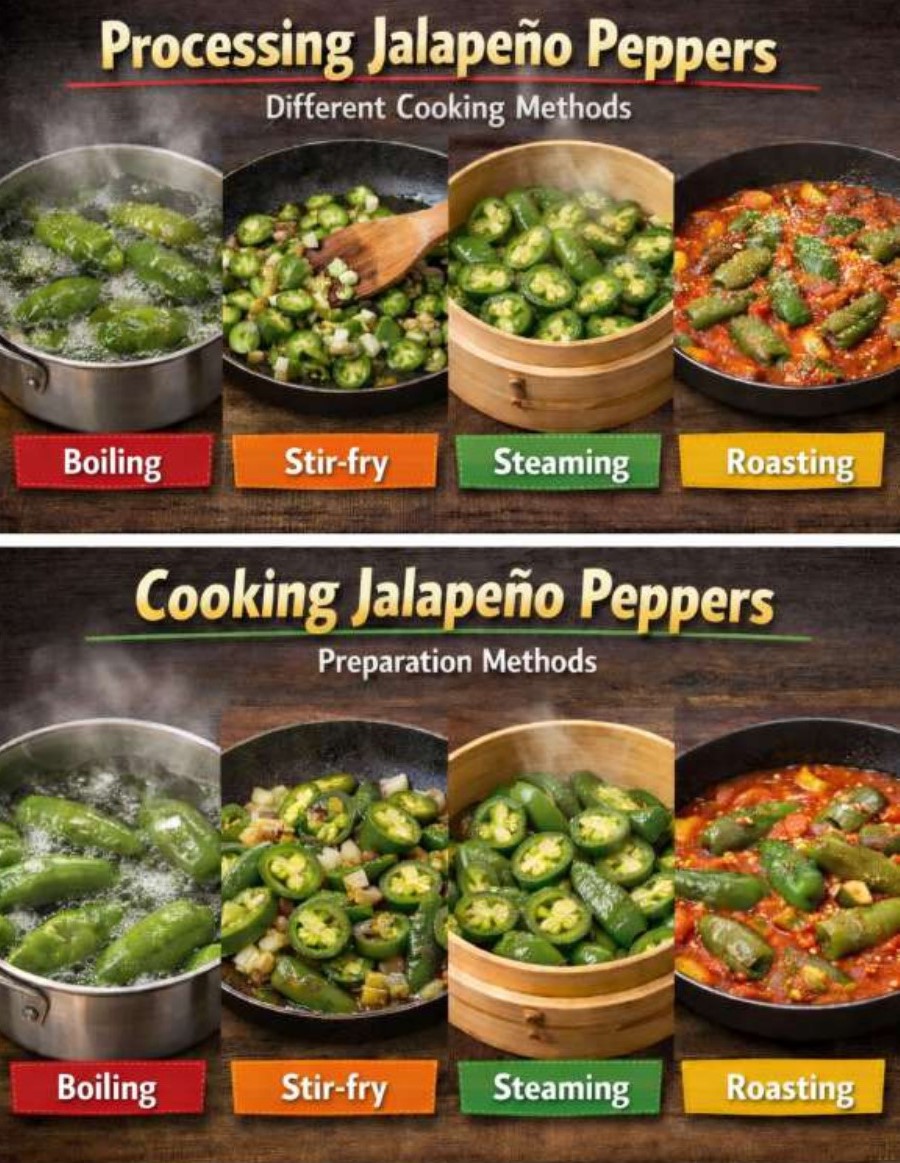
Los chiles jalapeños son ampliamente consumidos debido a su sabor distintivo y valor nutricional. Conocidos por su contenido significativo de ácido ascórbico y compuestos antioxidantes, han atraído el interés científico. En este estudio, investigamos cómo el procesamiento térmico (hervido, vapor, salteado y asado) afecta la actividad antioxidante y el contenido de ácido ascórbico de estos chiles. Se utilizaron tiempos de cocción de 5, 10 y 15 minutos, y las muestras se analizaron por triplicado. La actividad antioxidante se evaluó mediante el ensayo de eliminación de radicales DPPH, con absorbancia medida a 517 nm, en espectrofotómetro UV-Vis; el contenido de ácido ascórbico se determinó por titulación con 2,6-diclorofenolindofenol (DCPIP). El contenido de ácido ascórbico de los jalapeños crudos fue de 48.40 mg/100 g, el cual se modificó con los métodos de cocción: el hervido, después de 15 minutos, redujo el ácido ascórbico a 14.82 mg/100 g; la cocción al vapor a 15.67 mg/100 g; el salteado registró 26.71 mg/100 g, y el asado 33.59 mg/100 g. Para la actividad antioxidante, medida como porcentaje de eliminación de DPPH, las muestras crudas mostraron 76.21 %. Este porcentaje se redujo a 28.42 y 30.38 %, después del hervido y del cocinar al vapor, respectivamente, mientras que el salteado y el asado se incrementó a 52.18 y 61.74 %, respectivamente. Estos resultados indican que el procesamiento térmico afecta la calidad funcional de los chiles jalapeños. El método de asado resulta adecuado para preservar la actividad antioxidante y el contenido de ácido ascórbico de los jalapeños.
Referencias
Alberts, A., Moldoveanu, E.-T., Niculescu, A.-G., & Grumezescu, A. M. (2025). Vitamin C: A Comprehensive Review of Its Role in Health, Disease Prevention, and Therapeutic Potential. Molecules, 30(3), 748. https://doi.org/10.3390/molecules30030748
Alotaibi, S. H., Babiker, E. E., Alshammari, G. M., & Yahya, M. A. (2024). The Effect of Cooking and Simulated Digestion on the Antioxidants and Minerals in Rice Grains: A Predictor for Nutritional Efficiency. Agriculture, 14(8), 1270. https://doi.org/10.3390/agriculture14081270
Armesto, J., Gómez-Limia, L., Carballo, J., & Martínez, S. (2019). Effects of different cooking methods on the antioxidant capacity and flavonoid, organic acid and mineral contents of Galega Kale (Brassica oleracea var. acephala cv. Galega). International Journal of Food Sciences and Nutrition, 70(2), 136–149. https://doi.org/10.1080/09637486.2018.1482530
Association of Official Analytical Chemists. (1990). Official methods of Analysis of the AOAC. 15th ed. Arlington, VA, USA: AOAC International, 1990
Azeem, R., Aslam, M., Mehmood, T., & Al-Essa, L. A. (2025). Predicting extreme thermal degradation of ascorbic acid (Vitamin C) using Bayesian-Inverse Weibull models: Applications in stability analysis and process optimization. PLOS One, 20(12), e0328554. https://doi.org/10.1371/journal.pone.0328554
Cerit, İ., Pabuçcu, D., Sezgin, M., Bulut, B., & Demirkol, O. (2025). Effects of cooking on glutathione, cysteine, beta-carotene, ascorbic acid concentrations and antioxidant activity of red bell peppers (Capsicum annum L.). International Journal of Gastronomy and Food Science, 39, 101092. https://doi.org/10.1016/j.ijgfs.2024.101092
Cervantes-Paz, B., Yahia, E. M., Ornelas-Paz, J. de J., Gardea-Béjar, A. A., Ibarra-Junquera, V., & Pérez-Martínez, J. D. (2012). Effect of Heat Processing on the Profile of Pigments and Antioxidant Capacity of Green and Red Jalapeño Peppers. Journal of Agricultural and Food Chemistry, 60(43), 10822–10833. https://doi.org/10.1021/jf303091u
Chuah, A. M., Lee, Y. C., Yamaguchi, T., Takamura, H., Yin, L. J., & Matoba, T. (2008). Effect of cooking on the antioxidant properties of coloured peppers. Food Chemistry, 111(1), 20–28. https://doi.org/10.1016/j.foodchem.2008.03.022
Conaculta. (2021). El Cocinero Mexicano, Colección de Recetarios Antiguos.
Demirel-Ozbek, Y., & Saral, O. (2023). The effect of different cooking methods on the antioxidant activity of wild Swiss chard (Beta vulgaris L. var. cicla). Czech Journal of Food Sciences, 41(5), 375–381. https://doi.org/10.17221/114/2023-CJFS
Douiri-Bedoui, I., Abdellaoui, H., Alexa, R., Jacolot, P., Druon, C., Tessier, F. J., & Laguerre, J.-C. (2011). Optimization of microwave cooking of courgette in terms of nutrient preservation and energy consumption. Procedia Food Science, 1, 805–813. https://doi.org/10.1016/j.profoo.2011.09.122
FAOSTAT. (2020). Food and Agriculture Organization of the United Nations (FAO), FAOSTAT: Statistical Database, 2020. [Online]. Available: https://www.fao.org/faostat/
Fratianni, A., D’Agostino, A., Niro, S., Bufano, A., Paura, B., & Panfili, G. (2021). Loss or Gain of Lipophilic Bioactive Compounds in Vegetables after Domestic Cooking? Effect of Steaming and Boiling. Foods, 10(5), 960. https://doi.org/10.3390/foods10050960
Gamba, M., Raguindin, P. F., Asllanaj, E., Merlo, F., Glisic, M., Minder, B., … Muka, T. (2021). Bioactive compounds and nutritional composition of Swiss chard ( Beta vulgaris L. var. cicla and flavescens ): a systematic review. Critical Reviews in Food Science and Nutrition, 61(20), 3465–3480. https://doi.org/10.1080/10408398.2020.1799326
Gupta, D., & Mamta Kumari, D. (2025). Impact of food processing on nutrient retention and loss: a comprehensive review of key effects and mechanisms. Journal of Emerging Technologies and Innovative Research, 12(8). https://doi.org/10.56975/jetir.v12i8.567493
Hwang, I. G., Shin, Y. J., Lee, S., Lee, J., & Yoo, S. M. (2012). Effects of different cooking methods on the antioxidant properties of red pepper (Capsicum annuum L.). Preventive Nutrition and Food Science, 17(4), 286–292. https://doi.org/10.3746/pnf.2012.17.4.286
Jafari, M., Koocheki, A., & Milani, E. (2017). Effect of extrusion cooking of sorghum flour on rheology, morphology and heating rate of sorghum–wheat composite dough. Journal of Cereal Science, 77, 49–57. https://doi.org/10.1016/j.jcs.2017.07.011
Lee, S., Choi, Y., Jeong, H. S., Lee, J., & Sung, J. (2017). Effect of different cooking methods on the content of vitamins and true retention in selected vegetables. Food Science and Biotechnology. https://doi.org/10.1007/s10068-017-0281-1
Mengistu, H. K., & Beri, G. B. (2024). Cooking effect on bioactive compounds and antioxidant capacity of red pepper (Capsicum annuum L.). Heliyon, 10(17), e35418. https://doi.org/10.1016/j.heliyon.2024.e35418
Mwebi, N. O., & Ogendi, B. M. O. (2020). Effect of boiling, steaming, stir-frying and microwave cooking on the antioxidant potential of peppers of varying pungency. Cogent Food & Agriculture, 6(1), 1834661. https://doi.org/10.1080/23311932.2020.1834661
Murador, D. C., Mercadante, A. Z., & de Rosso, V. V. (2016). Cooking techniques improve the levels of bioactive compounds and antioxidant activity in kale and red cabbage. Food Chemistry, 196, 1101–1107. https://doi.org/10.1016/j.foodchem.2015.10.037
Njus, D., Kelley, P. M., Tu, Y.-J., & Schlegel, H. B. (2020). Ascorbic acid: The chemistry underlying its antioxidant properties. Free Radical Biology and Medicine, 159, 37–43. https://doi.org/10.1016/j.freeradbiomed.2020.07.013
Ornelas-Paz, J. de J., Cira-Chávez, L. A., Gardea-Béjar, A. A., Guevara-Arauza, J. C., Sepúlveda, D. R., Reyes-Hernández, J., & Ruiz-Cruz, S. (2013). Effect of heat treatment on the content of some bioactive compounds and free radical-scavenging activity in pungent and non-pungent peppers. Food Research International, 50(2), 519–525. https://doi.org/10.1016/j.foodres.2011.01.006
Ornelas-Paz, J. de J., Martínez-Burrola, J. M., Ruiz-Cruz, S., Santana-Rodríguez, V., Ibarra-Junquera, V., Olivas, G. I., & Pérez-Martínez, J. D. (2010). Effect of cooking on the capsaicinoids and phenolics contents of Mexican peppers. Food Chemistry, 119(4), 1619–1625. https://doi.org/10.1016/j.foodchem.2009.09.054
Pellegrini, N., Chiavaro, E., Gardana, C., Mazzeo, T., Contino, D., Gallo, M., … Porrini, M. (2010). Effect of Different Cooking Methods on Color, Phytochemical Concentration, and Antioxidant Capacity of Raw and Frozen Brassica Vegetables. Journal of Agricultural and Food Chemistry, 58(7), 4310–4321. https://doi.org/10.1021/jf904306r
Rana, M. R., Ahmad, H., Sayem, A. S. M., Jothi, J. S., Hoque, M. M., & Rahman, M. (2021). Effects of Different Cooking Methods on Physicochemical and Bioactive Compounds of Selected Green Vegetables in North Eastern Region, Bangladesh. Current Research in Nutrition and Food Science Journal, 9(2), 628–638. https://doi.org/10.12944/CRNFSJ.9.2.26
Sánchez-Toledano, B. I., Camarena Gómez, D. M. J., López Santiago, M. A., & Cuevas Reyes, V. (2023). Consumer Preferences of Jalapeño Pepper in the Mexican Market. Horticulturae, 9(6), 684. https://doi.org/10.3390/horticulturae9060684
Sindhi, V., Gupta, V., Sharma, K., Bhatnagar, S., Kumari, R., & Dhaka, N. (2013). Potential applications of antioxidants – A review. Journal of Pharmacy Research, 7(9), 828–835. https://doi.org/10.1016/j.jopr.2013.10.001
Tepe, B., Sokmen, M., Akpulat, H. A., & Sokmen, A. (2006). Screening of the antioxidant potentials of six Salvia species from Turkey. Food Chemistry, 95(2), 200–204. https://doi.org/10.1016/j.foodchem.2004.12.031
USDA. (2019). US Department of Agriculture, Agricultural Research Service., USDA FoodData Central. [Online]. Available: https://fdc.nal.usda.gov/
USDA. (2021). Choose MyPlate. [Online]. Available: https://www.myplate.gov/
Zhao, W., Xu, Y., Kim, J., Lee, J.-W., Jung, M. Y., & Moon, B. (2024). Effects of cooking methods on antioxidant activity and acrylamide formation in red bell pepper (Capsicum annuum L.). Food Science and Biotechnology, 33(10), 2323–2331. https://doi.org/10.1007/s10068-024-01623-y