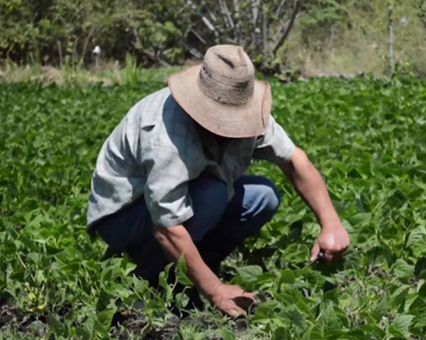
Efecto alelopático de extractos de Jatropha dioica y Flourensia cernua en plantas de Phaseolus vulgaris como planta modelo en el control de malezas
Palabras clave:
Semi-desierto, extractos vegetales, control, malezas.Resumen
La infestación de malezas en sistemas de cultivos es una problemática que afecta a productores agroindustriales a nivel mundial, México no es la excepción. Las malezas afectan los cultivos de manera directa impactando en la productividad y con pérdidas económicas excesivas. El manejo y control de malezas se lleva a cabo principalmente con el uso de herbicidas de síntesis química como el glifosfato, el cual a pesar de ser efectivo está relacionado con efectos nocivos para la salud pública y el medio ambiente. Por el contrario, el uso de herbicidas de origen natural como extractos vegetales son productos que podrían ser capaces de superar los rendimientos encontrados en los productos químicos. En el presente trabajo, las plantas originarias del semidesierto Chihuahuense Jatropha dioica y Flourensia cernua fueron analizadas encontrando en su composición flavonoides, taninos, cumarinas, purinas y saponinas, los cuales se ha reportado que alcanzaron valores de hasta 32% de inhibición en la germinación de semillas de Phaseolus vulgaris; mientras que en la evaluación post-emergencia los extractos alcanzaron una eficacia de entre 60 a 90 % causando efecto de moderado a severo en las plántulas tratadas. El uso de material vegetal con propiedades bioherbicidas podría tener un potencial sobresaliente para control de malezas.
Referencias
1. United Nations Department of Economic and Social Affairs, Population Division (2022). World Population Prospects 2022: Summary of Results. UN DESA/POP/2022/TR/NO. 3.
2. Lima Monteiro, Alex., de Freitas Souza, Matheus., Anizio Lins, Hamurábi., da Silva Teófilo, Taliane Maria., Barros Júnior, Aurélio Paes., Valadão Silva, Daniel., Mendonça, Daniel. (2021). A new alternative to determine weed control in agricultural systems based on artificial neural networks (ANNs). Field Crops Research, 263. https://doi.org/10.1016/j.fcr.2021.108075.
3. Riemens, Marleen., Sønderskov, Mette., Moonen, Anna-Camilla., Storkey, Jonathan., Kudsk, Per. (2022). An Integrated Weed Management framework: A pan-European perspective. European Journal of Agronomy, 133. https://doi.org/10.1016/j.eja.2021.126443.
4. Álvaro, A. (2007). Herbicidas: Modos y mecanismos de acción en plantas. Consultado 20 de septiembre de 2021. Disponible en: https://aulavirtual.agro.unlp.edu.ar/pluginfile.php/47809/mod_resource/content/1/Herbicidas%20Modos%20y%20Mec%20accion%20Anzalone.pdf
5. CEDRSSA. (2020). Uso y regulación de herbicidas en México. Consultado 24 septiembre de 2021. Disponible en: http://www.cedrssa.gob.mx/files/b/13/76Herbicidas.pdf
6. Marin-Morales, M., Ventura-Camargo, B., Hoshina, M. (2013). Toxicity of Herbicides: Impact on Aquatic and Soil Biota and Human Health.
7. Radhakrishnan, R., Alqarawi, A. A., Abdallah, E. F. (2018). Bioherbicides: Current knowledge on weed control mechanism. Ecotoxicology and environmental safety, 158: 131-138.
8. Kato-Noguchi, H., Suzuki, M., Noguchi, K., Ohno, O., Suenaga, K. Laosinwattana, C. (2016), A Potent Phytotoxic Substance in Aglaia odorata LOUR. Chem. Biodiversity, 13, 549-554. https://doi.org/10.1002/cbdv.201500175
9. Hasan, M., Ahmad-Hamdani, M. S., Rosli, A. M., Hamdan, H. (2021). Bioherbicides: An Eco-Friendly Tool for Sustainable Weed Management. Plants, 10 (6), 1212. https://doi.org/10.3390/plants10061212
10. Anwar, S., Naseem, S., Karimi, S., Asi, M.R., Akrem, A., Ali, Z (2021). Bioherbicidal Activity and Metabolic Profiling of Potent Allelopathic Plant Fractions Against Major Weeds of Wheat—Way Forward to Lower the Risk of Synthetic Herbicides. Front. Plant Sci. 12:632390. doi: 10.3389/fpls.2021.632390
11. Yunes, J.S. (2019). Chapter 22 - Cyanobacterial Toxins. Editor(s): A.K. Mishra, D.N. Tiwari, A.N. Rai. Cyanobacteria, Academic Press. 443-458. https://doi.org/10.1016/B978-0-12-814667-5.00022-2.
12. Korres, N.E., Burgos, N.R., Travlos, I., Vurro, M., Gitsopoulos, T.K., Varanasi, V.K., Duke, S.O., Kudsk, P., Brabham, C., Rouse, C.E., Salas-Perez, R. (2019). Chapter Six - New directions for integrated weed management: Modern technologies, tools and knowledge discovery. Editor(s): Donald L. Sparks. Advances in Agronomy. Academic Press. 155, 243-319. https://doi.org/10.1016/bs.agron.2019.01.006.
13. Stewart, A.J., Stewart, R.F. (2008). Phenols, Editor(s): Sven Erik Jørgensen, Brian D. Fath, Encyclopedia of Ecology, Academic Press, 2682-2689. https://doi.org/10.1016/B978-008045405-4.00417-1.
14. Tucuch-Pérez, M.A., Arredondo-Valdés, R., Hernández-Castillo, F.D. (2020). Antifungal activity of phytochemical compounds of extracts from Mexican semi-desert plants against Fusarium oxysporum from tomato by microdilution in plate method. Nova scientia, 12(25), 00007. Epub 17 de febrero de 2021. https://doi.org/10.21640/ns.v12i25.2345
15. El-Mergawi, R.A., Al-Humaid, A.I. (2019). Searching for natural herbicides in methanol extracts of eight plant species. Bull Natl Res Cent. 43, 22. https://doi.org/10.1186/s42269-019-0063-4
16. Martínez, G Almaguer, P Vazquez-Alvarado, A Figueroa, C Zúñiga, A Hernández-Ceruelos. 2014. Análisis fitoquímico de Jatropha dioica y determinación de su efecto antioxidante y quimioprotector sobre el potencial genotóxico de ciclofosfamida, daunorrubicina y metilmetanosulfonato evaluado mediante el ensayo cometa. Bol Latinoam Caribe Plant Med Aromat 13(5): 437 – 457.
17. Ramírez Moreno, A., Serrano Gallardo, L. B., Barragán Ledezma, L. E. B. L., Quintanar Escorza, M. A., Arellano Pérez-Vertti, R. D., & Delgadillo Guzmán, D. (2016). Determinación de los compuestos polifenólicos en extractos de Jatropha dioica y su capacidad antioxidante. Revista Mexicana de Ciencias Farmacéuticas, 47(4),42-48. [fecha de Consulta 5 de Diciembre de 2022]. ISSN: 1870-0195. Recuperado de: https://www.redalyc.org/articulo.oa?id=57956612004
18. Guerrero-Rodríguez, Eugenio, Solís-Gaona, Susana, Hernández-Castillo, Francisco Daniel, Flores-Olivas, Alberto, Sandoval-López, Víctor, & Jasso-Cantú, Diana. (2007). Actividad Biológica in vitro de Extractos de Flourensia cernua D.C. en Patógenos de Postcosecha: Alternaria alternata (Fr.:Fr.) Keissl., Colletotrichum gloeosporioides (Penz.) Penz. y Sacc. y Penicillium digitatum (Pers.:Fr.) Sacc. Revista mexicana de fitopatología, 25(1), 48-53. Recuperado en 05 de diciembre de 2022, de http://www.scielo.org.mx/scielo.php?script=sci_arttext&pid=S0185-33092007000100007&lng=es&tlng=es.
19. Molina-Salinas, G. M., Peña-Rodríguez, L. M., Mata-Cárdenas, B. D., Escalante-Erosa, F., González-Hernández, S., Torres de la Cruz, V. M., Martínez-Rodríguez, H. G., & Said-Fernández, S. (2011). Flourensia cernua: Hexane Extracts a Very Active Mycobactericidal Fraction from an Inactive Leaf Decoction against Pansensitive and Panresistant Mycobacterium tuberculosis. Evidence-based complementary and alternative medicine: eCAM, 2011, 782503. https://doi.org/10.1155/2011/782503
20. Aranda-Ledesma, N.E.; González-Hernández, M.D.; Rojas, R.; Paz-González, A.D.; Rivera, G.; Luna-Sosa, B.; Martínez-Ávila, G.C.G. (2022). Essential Oil and Polyphenolic Compounds of Flourensia cernua Leaves: Chemical Profiling and Functional Properties. Agronomy, 12, 2274. https://doi.org/10.3390/agronomy12102274
21. CONABIO (Consejo Nacional para el Conocimiento y Uso de la Biodiversidad). Malezas de México. http://www.conabio.gob.mx/malezasdemexico/2inicio/home-malezas-mexico.htm
22. Melgar-Rodríguez M. (2018). Tesis: Evaluación del efecto herbicida de Chloris gayana Kunth y aceite de coco sobre semillas de plántula de trigo Triticum aestivum L y frijol Phaseolus vulgaris L como plantas indicadoras. Universidad Autónoma Agraria Antonio Narro. Departamento de parasitología. Saltillo, Coahuila. México.
23. Castro-Carvajal, J.M. (2017). Tesis: Herbicidas en maíz, residualidad e impacto sobre la microbiota del suelo. Universidad Autónoma de Sinaloa. Facultad de agronomía. Culiacán, Sinaloa. México.
24. Muñiz-Moreno, L. (2017). Tesis: Manejo de herbicidas sintéticos y extractos vegetales para control de malezas en cultivos básicos: maíz, frijol y sorgo. Universidad Autónoma de Nuevo León. Facultad de agronomía. General Escobedo, Nuevo León. México.
25. El-Mergawi, R.A., Al-Humaid, A.I. (2019). Searching for natural herbicides in methanol extracts of eight plant species. Bull Natl Res Cent 43, 22. https://doi.org/10.1186/s42269-019-0063-4
26. Iqbal, J., Rehmani, M.I.A., Sagheer, S. Kaleem, N., Muneer, J. (2018). Herbicidal Potential of Some Dry Land Plants Against Lathyrus aphaca (L.), Winter Season Weed. Planta Daninha, v38:e020171297. https://doi.org/10.1590/S0100-83582020380100001.
27. Araujo-Espino D.I., Lazalde-Ramos B.P., Zamora-Perez A.L. (2023). Phytochemical and pharmacological properties of Jatropha dioica. J Plant Sci Phytopathol. 7: 010-013. DOI: 10.29328/journal.jpsp.1001098.
28. Guerrero-Rodríguez, E., Solís-Gaona, S., Hernández-Castillo, F.D., Flores-Olivas, A., Sandoval-López, V. (2007). Actividad Biológica in vitro de Extractos de Flourensia cernua D.C. en Patógenos de Postcosecha: Alternaria alternata (Fr.:Fr.) Keissl., Colletotrichum gloeosporioides (Penz.) Penz. y Sacc. y Penicillium digitatum (Pers.:Fr.) Sacc. Revista Mexicana de Fitopatología. 25 (1), 48-53.
29. Castillo, F., Hernández, D., Gallegos, G., Mendez, M., Rodríguez, R., Reyes, A., and Aguilar, C. N. (2010). In vitro antifungal activity of plant extracts obtained with alternative organic solvents against Rhizoctonia solani Kühn. Industrial Crops and Products, 32(3): 324-328.
30. Falleh H, Ksouri R, Chaieb K, Karray-Bouraoui N, Trabelsi N, Boulaaba M, Abdelly C. (2008). Phenolic composition of Cynara cardunculus L. organs, and their biological activities. C R Biol. May;331(5):372-9. doi: 10.1016/j.crvi.2008.02.008. Epub 2008 Mar 17. PMID: 18472083.
31. Ben Kaab, S., Lins, L., Hanafi, M., Bettaieb Rebey, I., Deleu, M., Fauconnier, M. L., Ksouri, R., Jijakli, M. H., & Clerck, C. (2020). Cynara cardunculus Crude Extract as a Powerful Natural Herbicide and Insight into the Mode of Action of Its Bioactive Molecules. Biomolecules, 10(2), 209. https://doi.org/10.3390/biom10020209
32. García, J. D., Anguiano-Cabello, J. C., Arredondo-Valdés, R., Candido-Toro, C. A., Martínez-Hernández, J. L., Segura-Ceniceros, E. P., Govea-Salas, M., González-Chávez, M. L., Ramos-González, R., Esparza-González, S. C., Ascacio-Valdés, J. A., López-Badillo, C. M., & Ilyina, A. (2021). Phytochemical characterization of phoradendron bollanum and viscum album subs. Austriacum as mexican mistletoe plants with antimicrobial activity. Plants, 10(7), 1–16. https://doi.org/10.3390/plants10071299
33. Kaab, S.B.; Rebey, I.B.; Hanafi, M.; Hammi, K.M.; Smaoui, A.; Fauconnier, M.L.; Ksouri, R. (2020). Screening of Tunisian plant extracts for herbicidal activity and formulation of a bioherbicide based on Cynara cardunculus. South African Journal of Botany, 128: 67-76.
34. Rojas-Garcidueñas, M., & Gámez-Gonzales, H. (2002). Herbicidas de origen natural. Ciencia, 5(2), 160–164.
35. Dear B. S., Sandral G. A., Spencer D., Khan M. R. I. Higgins T. J. V. (2003) The tolerance of three transgenic subterranean clover (Trifolium subterraneum L.) lines with the bxn gene to herbicides containing bromoxynil. Australian Journal of Agricultural Research 54, 203-210. https://doi.org/10.1071/AR02134.
36. Ekhator, F & Ola, Oluwaseun & Ikuenobe, C. (2018). Effectiveness of tank mixture of glyphosate plus metsulfuron for weed control in a juvenile oil palm in Nigeria. 10.13140/RG.2.2.22890.77768.
37. Terrazas-Hernández J, Santos-López EM, Cariño-Cortés R, Jiménez-Alvarado R, López-Palestina CU, Hernández-Fuentes AD. Effects of Sterilization on Bioactives of Jatropha dioica and Opuntia oligacantha Extracts, and on Antimicrobial Capacity against Streptococcus mutans. Applied Sciences. 2018; 8(12):2516. https://doi.org/10.3390/app8122516
38. Gutiérrez-Tlahque, Jorge & Aguirre-Mancilla, Cesar L. & López-Palestina, César Uriel & Sánchez Fernández, Rosa & Hernández-Fuentes, Alma & Torres-Valencia, J. (2019). Constituents, Antioxidant and Antifungal Properties of Jatropha dioica var. dioica. Natural Product Communications. 14. 1934578X1985243. 10.1177/1934578X19852433.
39. Tellez, M., Estell, R., Fredrickson, E., Powell, J., Wedge, D., Schrader, K., & Kobaisy, M. (2001). Extracts of Flourensia cernua (L): volatile constituents and antifungal, antialgal, and antitermite bioactivities. Journal of chemical ecology, 27(11), 2263–2273. https://doi.org/10.1023/a:1012283005014
40. Kaur, S., Dhanda,S., Yadav, A., Sagwal, P., Yadav, D.V., Chauhan, B.S. (2022). Chapter Six - Current status of herbicide-resistant weeds and their management in the rice-wheat cropping system of South Asia, Editor(s): Donald L. Sparks, Advances in Agronomy, Academic Press, 172, 307-354. https://doi.org/10.1016/bs.agron.2021.10.004.
41. Dai, L., Wu, L., Zhou, X. et al. 2022. Effects of water extracts of Flaveria bidentis on the seed germination and seedling growth of three plants. Sci Rep 12, 17700. https://doi.org/10.1038/s41598-022-22527-z
42. Sawadogo/Ilboudo, T.C., Yonli, D., Sourabie, S. et al. 2022. Aqueous extracts from indigenous plant in Burkina Faso with bio-herbicide properties to reduce Striga hermonthica (Del.) Benth propagation. CABI Agric Biosci 3, 61. https://doi.org/10.1186/s43170-022-00129-z
43. Martínez Cárdenas, C. A., Balaguera-López, H. E. and Fonseca Carreño, J. A. (2022). Bioherbicidal activity of seed extract of Campomanesia lineatifolia on the weed Sonchus oleraceus L. Agronomía Colombiana, 40(1), 49–57. https://doi.org/10.15446/agron.colomb.v40n1.98502
44. Gniazdowska, A., & Bogatek, R. (2005). Allelopathic interactions between plants. Multi site action of allelochemicals. Acta Physiologiae Plantarum, 27, 395–407.
45. Jabran, K. (2017). Wheat Allelopathy for Weed Control. In: Manipulation of Allelopathic Crops for Weed Control. SpringerBriefs in Plant Science. Springer, Cham. https://doi.org/10.1007/978-3-319-53186-1_2
46. Chen, Y., Althiab Almasaud, R., Carrie, E., Desbrosses, G., Binder, B. M., Chervin, C. (2020). Ethanol, at physiological concentrations, affects ethylene sensing in tomato germinating seeds and seedlings. Plant science: an international journal of experimental plant biology, 291, 110368. https://doi.org/10.1016/j.plantsci.2019.110368
47. Reichel, Tharyn & Barazetti, J.F. & Stefanello, Suzana & Paulert, R. & Zonetti, Patricia. (2013). Allelopathy of leaf extracts of jatropha (Jatropha curcas L.) in the initial development of wheat (Triticum aestivum L.). Idesia. 31. 45-52.
48. Khattak, Adnan & Ullah, F. & Bokhari, T. & Wazir, S. & Shinwari, Zabta. (2015). Allelopathic Potential of Jatropha Curcas L. Leaf Aqueous Extracts on Seed Germination and Early Seedling Growth of Wheat. Pakistan Journal of Botany. 47. 2449-2454.