Producción de biodiésel y análisis de costos usando aceite de cocina
Palabras clave:
biocombustibles, aceite usado de cocina, transesterificación, hollín.Resumen
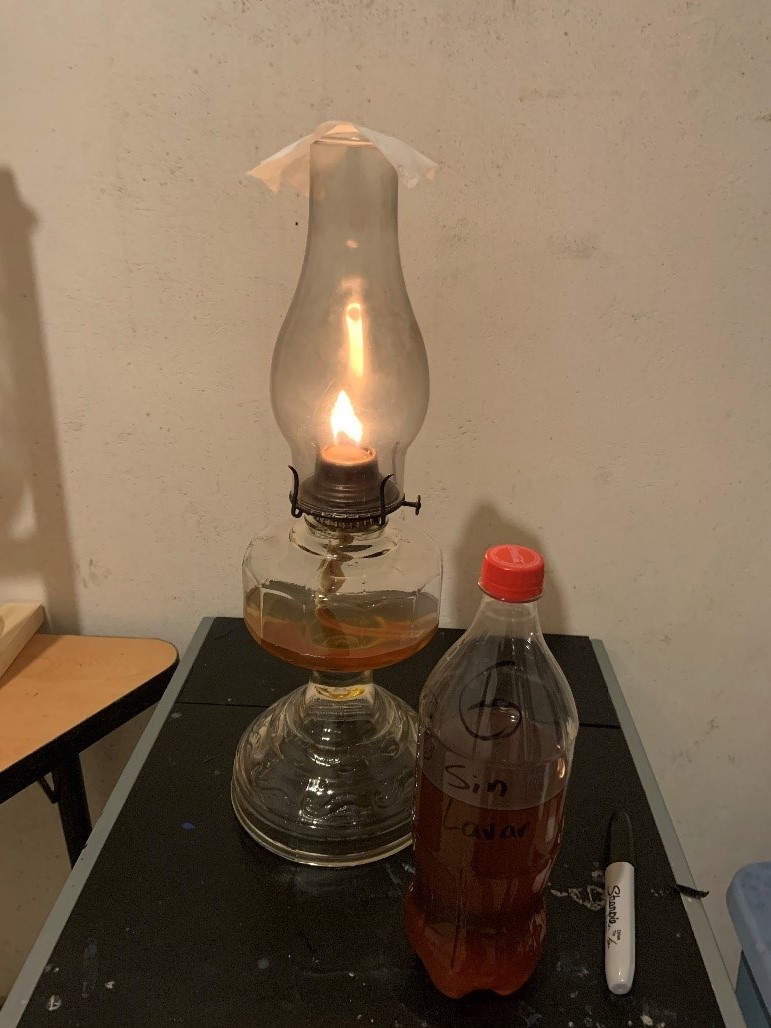
Los biocombustibles están tomando protagonismo en el escenario energético debido a que son renovables, siendo uno de ellos el biodiésel, se puede obtener de varias formas, entre ellas está el proceso de transesterificación de ácidos grasos el cual es una técnica muy representativa debido a su facilidad y practicidad, el método empleado fue generado con una agitación constante en un tiempo determinado, lo cual resulta ser idóneo para la obtención del biodiésel a partir del aceite usado de cocina, los resultados en la obtención del biodiésel fueron aplicados en una lámpara de aceite, logrando un mayor punto de inflamación (148 °C) que el diésel (71 °C), mayor practicidad y menor concentración de hollín (216, 215 y 220 de RGB) comparándolo con el diésel convencional (65, 64, 59 de RGB), se realizó un análisis de costos y se llegó a la conclusión que se puede obtener un biocombustible de bajo costo debido a la reducción del gasto de la materia prima, siendo esta última el mayor obstáculo para la comercialización del biocombustible, por lo que se afirma que se puede generar un biocombustible limpio, simple en su elaboración y eficiente en diversas aplicaciones.
Referencias
1. Fernández G.J, Gutiérrez Martin, Fernando, Del Rio González, Pablo, San Miguel Alfaro, Guillermo, Bahillo Ruiz, Alberto, Sánchez Hervas, José María, Ballesteros Perdices, Mercedes, Vázquez Minguela, Jesús Ángel, Aracil Mira, José, Rodríguez Anton, Luis Miguel. (2015). Tecnologías para el uso y transformación de biomasa energética. México: Ediciones Paraninfo. Ediciones Mundi-Prensa, https://books.google.com.gt/books?id=k9ISCgAAQBAJ&printsec= copyright#v=onepage&q&f=false
2. Hosmath, R.S., Banapurmath N.R., Khandal S.V., Gaitonde V.N., Basavarajappa Y.H., Yaliwal V.S. (2016). Effect of compression ratio, CNG flow rate and injection timing on the performance of dual fuel engine operated on honge oil methyl ester (HOME) and compressed natural gas (CNG). Renewable Energy, 93:579-590, ISSN 0960-1481, https://doi.org/10.1016/j.renene.2016.03.010.
3. Chen Y, Jinqiu Ma, Bin Han, Peng Zhang, Haining Hua, Hao Chen, Xin Su. (2018). Emissions of automobiles fueled with alternative fuels based on engine technology: A review. Journal of Traffic and Transportation Engineering (English Edition), 5(4): 318-334, ISSN 2095-7564, https://doi.org/10.1016/j.jtte.2018.05.001.
4. Noor M.C.W, Noor M.M., Mamat R. (2018). Biodiéselas alternative fuel for marine diesel engine applications: A review. Renewable and Sustainable Energy Reviews, 94:127-142, ISSN 1364-0321, https://doi.org/10.1016/j.rser.2018.05.031.
5. Teixeira MR, Nogueira R, Nunes LM. (2018). Quantitative assessment of the valorisation of used cooking oils in 23 countries. Waste Manage, 78:611–20. https://doi. org/10.1016/j.wasman.2018.06.039.
6. Chen G, Liu J, Yao J, Qi Y, Yan B. (2017). Biodiesel production from waste cooking oil in a magnetically fluidized bed reactor using whole-cell biocatalysts. Energy Convers Manage, 138:556–64. https://doi.org/10.1016/j.enconman.2017.02.036.
7. Zhang H, Li L, Zhou P, Hou J, Qiu Y. (2014). Subsidy modes, waste cooking oil and biofuel: policy effectiveness and sustainable supply chains in China. Energy Policy, 65:270–4. https://doi.org/10.1016/j.enpol.2013.10.009.
8. Goh B.H.H, Cheng Tung Chong, Yuqi Ge, Hwai Chyuan Ong, Jo-Han Ng, Bo Tian, Veeramuthu Ashokkumar, Steven Lim, Tine Seljak, Viktor Józsa. (2020). Progress in utilisation of waste cooking oil for sustainable biodiéseland biojet fuel production, Energy Conversion and Management, Volume 223, 113296, ISSN 0196-8904, https://doi.org/10.1016/j.enconman.2020.113296.
9. Othman M.F., Abdullah Adam, G. Najafi, Rizalman Mamat. (2017). Green fuel as alternative fuel for diesel engine: A review. Renewable and Sustainable Energy Reviews, 80: 694-709, ISSN 1364-0321, https://doi.org/10.1016/j.rser.2017.05.140.
10. Ali OM, Mamat R, Abdullah NR, Adam A. (2016). Analysis of blended fuel properties and engine performance with palm biodiesel-diesel blended fuel. Renewable Energy, 86:59–67. https://doi.org/10.1016/j.renene.2015.07.103
11. Kumar N., Varun, Chauhan SR. (2013). Performance and emission characteristics of biodiéselfrom different origins: a review, Renew. Sustain. Energy Rev. 21:633-658. https://doi.org/10.1016/j.rser.2013.01.006
12. Atabani A.E., Silitonga A.S., Badruddin I.A, Mahlia T.MI, Masjuki H.H, Mekhilef S.A. (2012). A comprehensive review on biodiesel as an alternative energy resource and its characteristics. Renew Sustain Energy Rev, 16:2070–93. https://doi.org/10.1016/j.rser.2012.01.003
13. Singh B, Guldhe A, Rawat I, Bux F. (2014). Towards a sustainable approach for development of biodiéselfrom plant and microalgae. Renew Sustain Energy Rev, 29:216–45. https://doi.org/10.1016/j.rser.2013.08.067
14. Xing AH, Ma J, Zhang YH, Wang Y, Yong Jin. (2010). Life cycle assessment of economy for biodiesel. J Tsinghua Univ, 50:923–927.
15. Zaman, A.U. (2016). A comprehensive study of the environmental and economic benefits of resource recovery from global waste management systems. J. Clean. Prod. 124: 41-50. https://doi.org/10.1016/j.jclepro.2016.02.086
16. Nantha-Gopal K, Pal A, Sharma S, Samanchi C, Sathyanarayanan K, Elango T. (2014). Investigation of emissions and combustion characteristics of a CI engine fueled with waste cooking oil methyl ester and diesel blends. Alex Eng J, 53:281–7, https://doi.org/10.1016/j.aej. 2014.02.003
17. Örs I., Sarıkoç S, Atabani A.E, Ünalan S, Akansu S.O. (2018). The effects on performance, combustion and emission characteristics of DICI engine fuelled with TiO2 nanoparticles addition in diesel/biodiesel/n-butanol blends, Fuel, (234) 177-188, ISSN 0016-2361, https://doi.org/10.1016/j.fuel.2018.07.024
18. Reddy V.M, Biswas P, Garg P, Kumar S. (2014). Combustion characteristics of biodiéselfuel in high recirculation conditions, Fuel Process. Technol. 118: 310-317. https://doi.org/10.1016/j.fuproc.2013.10.004
19. Hajjari M, Tabatabaei M, Aghbashlo M, Ghanavati H. (2017). A review on the prospects of sustainable biodiéselproduction: a global scenario with an emphasis on waste-oil biodiéselutilization. Renew Sustain Energy Rev. 72:445e64. https://doi.org/10.1016/j.rser.2017.01.034.
20. Khan Y.T.M., Irfan Anjum Badruddin, Ahmad Badarudin, N.R. Banapurmath, N.J. Salman Ahmed, G.A. Quadir, Abdullah A.A.A. Al-Rashed, H.M.T. Khaleed, Sarfaraz Kamangar. (2015). Effects of engine variables and heat transfer on the performance of biodiéselfueled IC engines, Renewable and Sustainable Energy Reviews. 44: 682-691, ISSN 1364-0321, https://doi.org/10.1016/j.rser.2015.01.025.
21. CEUPE (2021). ¿Qué es la transesterificacion? [Articulo]. CEUPE. Recuperado de: https://www.ceupe.com/blog/que-es-la-transesterificacion.html
22. Gutiérrez Pulido Humberto, De la Vara Salazar Román. (2012). Análisis y diseño de experimentos, 1-489. México: McGraw-Hill. ISBN 6071507251, 9786071507259
23. García-Muentes, Segundo Alcides, Lafargue-Pérez, Francisco, Labrada-Vázquez, Benigno, Díaz-Velázquez, Manuel, & Sánchez del Campo-Lafita, Ana Estela. (2018). Propiedades fisicoquímicas del aceite y biodiesel producidos de la Jatropha curcas L. en la provincia de Manabí, Ecuador. Revista Cubana de Química, 30(1), 142-158.
24. España G.A. (2019). Producción de biodiésel a partir de aceites vegetales y grasas animales recicladas (Maestría). Universidad Autónoma de Zacatecas “Francisco García Salinas”, pagina web: https://1library.co/document/zx9vg9nz-produccion-biodiesel-partir-aceites-vegetales-grasas-animales-recicladas.html
25. Campos U.C.M., Delgado Saavedra, H. A. G., Esquivel Chávez, J. D., Samamé Salazar, J. L. J., & Sirlupú Zapata, J. D. (2018). Diseño de la línea de producción para la elaboración de biodiesel a partir de aceite residual recolectado de la industria chiflera piurana. Creative Commons Atribución-NoComercial-SinDerivar 4.0 Internacional Repositorio institucional PIRHUA – Universidad de Piura. Facultad de Ingeniería, Área Departamental de Ingeniería Industrial y de Sistemas.
26. Piker A, Betina Tabah, Nina Perkas, Aharon Gedanken, (2016). A green and low-cost room temperature biodiéselproduction method from waste oil using egg shells as catalyst, Fuel, Volume 182, Pages 34-41, ISSN 0016-2361, https://doi.org/10.1016/j.fuel.2016.05.078.
27. García, M.A. (2009). Estudio de los efectos de la post inyección sobre el proceso de combustión y la formación de hollín en motores diésel (Doctoral dissertation, Universitat Politècnica de València), https://dialnet.unirioja.es/servlet/tesis?codigo=83892
28. Kennedy I.M. (1997). Models of soot formation and oxidation. Progress in Energy and Combustion Science, Volume 23, Issue 2, pp. 95-132.
29. Labeckas G, Slavinskas S. (2013). Performance and emission characteristics of a direct injection diesel engine operating on KDV synthetic diesel fuel. Energy Convers Manag, 66(0):173–188. https://doi.org/10.1016/j.enconman.2012.10.004
30. Ushakov S, Valland H, Vilmar A. (2013). Combustion and emissions characteristics of fish oil fuel in a heavy-duty diesel engine. Energy Convers Manag, 65(0):228–238. https://doi.org/10.1016/j.enconman.2012.08.009
31. Lapuerta M., Armas Octavio Reyes Garcia-Contreras. (2007). Stability of dieselbioethanol blends for use in diesel engines. Fuel, 86:1351-7. https://doi.org/10.1016/j.fuel.2006.11.042
32. Shivakumar, Srinivasa Pai P, Shrinivasa Rao BR. (2011). Artificial Neural Network based prediction of performance and emission characteristics of a variable compression ratio CI engine using WCO as a biodiéselat different injection timings. Appl Energy, 88(7):2344–54. DOI: 10.1016/j.apenergy.2010.12.030
33. Rashedul H.K, Masjuki M.A, Kalam A.M, Ashraful S.M, Ashrafur Rahman, Shahir S.A.
(2014). The effect of additives on properties, performance and emission of biodiéselfuelled compression ignition engine. Energy Convers Manage, 88:348–64. https://doi.org/10.1016/j. enconman.2014.08.034
34. Subramanian T, Varuvel EG, Martin LJ, Beddhannan N. (2017). Effect of lower and higher alcohol fuel synergies in biofuel blends and exhaust treatment system on emissions from CI engine. Environ Sci Pollut Control Ser, 24(32): 25103e13. DOI:10.1007/s11356-017-0214-9
35. Yuan X, Leng L, Xiao Z, Lai C, Jiang L, Wang H, et al. (2016). Pyrolysis and combustión kinetics of glycerol-in-diesel hybrid fuel using thermogravimetric analysis, Fuel, 182:502e8. https://doi.org/10.1016/j.fuel.2016.06.008.
36. Wright MM, Daugaard DE, Satrio JA, Brown RC. (2010). Techno-economic analysis of biomass fast pyrolysis to transportation fuels. Fuel, 89:2–10. https://doi.org/10.1016/j.fuel. 2010.07.029
37. Rodríguez Hernández R., Góngora González S., Reyes Reyes A. L., Sánchez-Vásquez V. (2018). Análisis de competitividad y rentabilidad de producción de biodiéselde granos de moringa en Chiapas y Yucatán, México. Rev. Mex. Cienc. Agríc. vol. 9 núm. 5 https://doi.org/10.29312/remexca.v9i5.716