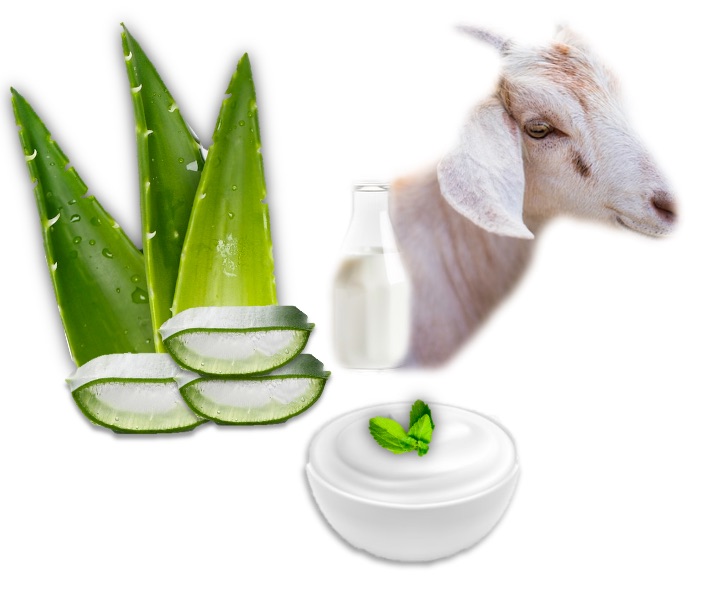
Evaluación del índice glicémico in vitro e in vivo de yogurt funcional de leche de cabra adicionado con Aloe vera y Stevia rebaudiana
Palabras clave:
Alimento funcional, Diabetes, Inhibición enzimática, Índice glicémico; Carga glicémica.Resumen
El propósito de este trabajo fue evaluar la funcionalidad in vitro (inhibición de a-amilasa y a-glucosidasa) e in vivo (Índice Glicémico y Carga Glicémica) de tres formulaciones 1) yogurt natural (N), 2) 10% pulpa de Aloe vera y sacarosa (AA) y 3) 10% pulpa de Aloe vera y Stevia rebaudiana (AS). Determinando el % de inhibición de la actividad α- amilasa y α-glucosidasa, Índice Glicémico (IG) y Carga Glicémica (CG). Se obtuvo una inhibición de la actividad α-amilasa de 43.01%, 44.66% y 55.75% para el yogurt N, AA, y AS, respectivamente. Por otra parte, la inhibición α-glucosidasa fue de 3.29%, 6.35% y 22.87% para yogurt N, AA, y AS, respectivamente. El IG y CG del yogurt N fue 36.11 y 9.02, para yogurt AA fue 55.51 y 13.90 y para yogurt AS fue 16.13 y 4.02, respectivamente. La mejor formulación fue AS su consumo en los sujetos evaluados mantuvo los niveles de glucosa en sangre dentro de los valores normales.
Referencias
1. Alcantar Rodríguez, V., González Rosendo, G., Rodríguez Murguía, N., Villanueva Sánchez, J., Quintero Gutiérrez. (2013). Índice glucémico en alimentos compuestos, https://dialnet.unirioja.es/servlet/articulo?codigo=7786651, Rev Esp Nutr Comunitaria, 19 (4), 216-223 (2013).
2. Aston LM., Gambell JM., Lee DM., Bryant SP., Jebb SA., Determination of the glycaemic index of various staple carbohydrate-rich foods in the UK diet, https://doi.org/10.1038/sj.ejcn.1602723, Eur J Clinic Nutr, 62, 279-285 (2009).
3. Brand-Miller, J., Glicemic Index. http://www.glycemicindex.com/about.php, University of Sydney, Glicemic Index, (2017).
4. Codex alimentaris, Leche y productos lacteos, sedunda edición, https://www.fao.org/3/i2085s/i2085s.pdf, FAO, Organización de las Naciones Unidas para la Alimentación y la Agricultura, ISSN 1020-2579, 2011.
5. Cuvas R., Montañez J., Contreras JC., Cruz M., Mussatto S. and Belmares R., Aloe vera and Probiotics: A New Alternative to Symbiotic Functional Foods, https://doi.org/10.9734/ARRB/2016/22622, Ann Reser & Rev Biol, 9 (2), 1-11, (2016).
6. Dämon S., Schätzer M., Hö J., Tomasec G., Hoppichler F., Nutrition and diabetes mellitus: an overview of the current evidence, https://doi.org/10.1007/s10354-011-0888-4, Wien. Med. Wochenschr, 161, 282-288, (2011).
7. Dasgupta N., Muthukumar SP., Murthy PS., Solanum nigrum Leaf : Natural Food Against Diabetes and its Bioactive Compounds, https://scialert.net/abstract/?doi=rjmp.2016.181.193, Res J Med Plant,10, 181-193, (2016).
8. Djeridane A., Hamdi A., Bensania W., Cheifa K., Lakhdari I., Yousfi M., The in vitro evaluation of antioxidative activity -glucosidase and -amylase enzyme inhibitory of natural phenolic extracts, https://doi.org/10.1016/j.dsx.2013.10.007, Res Rev, 9 (4), 324-331, (2015).
9. ENSANUT. Encuesta Nacional de Salud y Nutrición de Medio Camino 2016, http://www.epidemiologia.salud.gob.mx/doctos/encuestas/resultados/ENSANUT.pdf, 2016.
10. Franco-Mijares AC., Cardona-Pimentel G., Villegas-Canchola KP., Vázquez-Flores L., Juareui-Vega P., Jaramillo-Barrón E., Nava A., Sobre el índice glucémico y el ejercicio físico en la nutrición humana. www.medigraphic.com/elresidente, El Residente, 8 (3), 89–96, (2013).
11. Guerrero Morales JC., Rosas Romero R., García Zepeda RA., Oropeza Hernández R., Ruiz Jiménez S., Ríos Chávez AN., Cervantes Covarrubias L., Determinación del índice glucémico y la carga glucémica de productos lácteos fermentados en sujetos adultos sanos, sedentarios y deportistas, http://dx.doi.org/10.20960/nh.572, Nutr Hosp, 33, 1095-1101, (2016).
12. Góngora Salazar VA., Vázquez Encalada S., Corona Cruz A., Segura Campos MR., Stevia rebaudiana: A sweetener and potential bioactive ingredient in the development of functional cookies, https://doi.org/10.1016/j.jff.2018.03.007, J Func Foods, 44, 183-190, (2018).
13. Haloluwe Kankanamge S.T., Chalani Oshala H., Katugampalage Don Prasanna P.G. Evaluation of functional properties in ready-to-drink beverage formulated with Kalanchoe pinnata (Akkapana) and Aloe vera, https://doi.org/10.22059/jfabe.2022.348521.1128, J Food Bioprocess Eng, 5(2): 168-177, (2022).
14. Hernández-Monzón, A., Torres-Herrera, A., Duarte-García, C., Rodríguez Villacis, D. Desarrollo de una leche fermentada de cabra con cultivos probióticos. http://www.redalyc.org/articulo.oa?id=445546669002, Tecnol Quim, 36 (3), 321–336, (2016).
15. ISO-26642. ISO 26642:2010 Food products. Determination of the glycaemic index (GI) and recommendation for food classification. https://www.iso.org/standard/43633.html, (2010).
16. Kalyankar SD., Khedkar CD., Patil AM., Goat: Milk, Encyclopedia of Food and Health, Primera Edición, Elsevier Ltd, ISBN: 9780123849472, 358, United Kingdom. (2016).
17. Lima Illescas, Miriam Verónica; Jiménez Jaramillo, Diego José; Porras Polo, Claudia Adriana; Maurat Argudo, Andrea Karina; Álvarez Álvarez, Diana Patricia. Efectos de azúcares totales sustitutos de sacarosa en la salud bucal. https://doi.org//10.37135/ee.04.14.11, Revista Eugenio Espejo, 16 (2), 101-108, (2022).
18. Longoria-García, S., Belmares-Cerda, R. E., Flores-Verástegui, M. I., Contreras-Esquivel, J. C., Montañez-Sáenz, J. C., & Cruz-Hernández, M. A., Prebiotics, Probiotics, Synbiotics and Functional Foods in Control and Treatment of Type II Diabetes Mellitus and Colorectal Cancer. Probiotics and Prebiotics in Human Nutrition and Health, Edition First, Venketeshwer Rao, ISBN: 978-953-51-2476-4, 17, 345-362, London, United Kingdom, (2016).
19. Lordan S., Smyth TJ., Soler-Vila A., Stanton C., Ross, RP. The α-amylase and α-glucosidase inhibitory effects of Irish seaweed extracts, https://doi.org/10.1016/j.foodchem.2013.04.123, Food Chem. 141 (3), 2170–2176, (2013).
20. Mathur R. and Johri N., Nutritional composition of Stevia rebaudiana, a sweet herb, and its hypoglycaemic and hypolipidaemic effect on patients with non-insulin dependent diabetes mellitus. https://doi.org/10.1002/jsfa.7627, J Sci Food Agric, 96 (12), 4231-4234, (2016).
21. Méndez López LF., Melendez Corral M., Cerda Flores RM., de la Garza Hernández AL., Ramírez López E., Ibarra Salas M., Garza Juárez, AdeJ., Standardization and Glycemic Index of a Traditional Oat (Avena sativa) Beverage. http://pubs.sciepub.com/jfnr/4/6/7, J. Food Nutr Res, 4 (6), 388-393, (2016).
22. Narayana, N.K., Govinda, G., Kumari, A.V. and Palliyaguru, O.G. Effect of sugar replacement with stevia on quality of vanilla flavoured cow milk set yoghurt, https://doi.org/10.26656/fr.2017.6(5).548, Food Res, 6 (5): 174-182, (2022).
23. Norma Oficial Mexicana, NOM-012-SSA3-2012, Que establece los criterios para la ejecución de proyectos de investigación para la salud en seres humanos. http://dof.gob.mx/nota_detalle.php?codigo=5284148&fecha=04/01/2013, (2012).
24. Norma Oficial Mexicana, NOM-181-SCFI-2010, Yogurt Denominación, especificaciones fisicoquímicas y microbiológicas, información comercial y métodos de prueba. http://www.dof.gob.mx/normasOficiales/4209/seeco/seeco.htm, (2010).
25. Norma Oficial Mexicana: NOM-243-SSA1-2010, Productos y servicios. Leche, fórmula láctea, producto lácteo combinado y derivados lácteos. Disposiciones y especificaciones sanitarias. Métodos de prueba. http://dof.gob.mx/normasOficiales/4156/salud2a/salud2a.htm, (2010).
26. Östman EM., Liljeberg Elmståhl HGM., Björck, IME. Inconsistency between glycemic and insulinemic responses to regular and fermented milk products. https://doi.org/10.1093/ajcn/74.1.96, Am. J. Clin. Nutr. 74(1), 96-100, (2001).
27. Panahi S., Khoury D., Kubant R., Akhavan T., Luhovyy B., Goff D., Anderson GH., Mechanism of action of whole milk and its components on glycemic control in healthy young men. https://doi.org/10.1016/j.jnutbio.2014.07.002, J. Nutr. Biochem. 25 (11), 1124-1131, (2014).
28. Pérez-Ramírez I., Castaño-Tostado E., De León J., Rocha-guzmán N., Reynoso-Camacho R., Effect of stevia and citric acid on the stability of phenolic compounds and in vitro antioxidant and antidiabetic capacity of a roselle (Hibiscus sabdariffa L.) beverage, https://doi.org/10.1016/j.foodchem.2014.09.126, Food Chem. 172, 885–892, (2015).
29. Radha, M. H., & Laxmipriya, N. P., Evaluation of biological properties and clinical effectiveness of Aloe vera: A systematic review, https://doi.org/10.1016/j.jtcme.2014.10.006, J Tradit Complement Med. 5 (1), 21–26, (2015).
30. Ramchandran L., Shah NP., Proteolytic profiles and angiotensin-I converting enzyme and α-glucosidase inhibitory activities of selected lactic acid bacteria, https://doi.org/10.1111/j.1750-3841.2007.00643.x, J. Food Sci, 73 (2), 75-81, (2008).
31. Ramesh P., Raj S., Suneel O., Satvinder S., Shaik H., Hypoglycemic and Hypolipidemic Effects of Aloe vera Extract Preparations: A Review, https://doi.org/10.1002/ptr.5532, Phytother Res, 30, 200-207, (2006).
32. Ruiz-Ruiz JC., Moguel-Ordoñez YB., Matus-Basto AJ., Segura-Campos MR. Antidiabetic and antioxidant activity of Stevia rebaudiana extracts (var. Morita) and their incorporation into a potential functional bread, https://doi.org/10.1007/s13197-015-1883-3, J. Food Sci Tech, 52 (12), 7894-7903, (2015).
33. Ruiz Ruiz JC, Segura CamposMR. Development of nopal-pineapple marmalade formulated with stevia aqueous extract: effect on physicochemical properties, inhibition of α-amylase, and glycemic response, http://dx.doi.org/10.20960/nh.02048, Nutr Hosp., 36 (5), 1081-1086, (2019).
34. Shivani Chauhan, Pratik Powar and Rahul Mehra. A review on nutritional advantages and nutraceutical properties of cow and goat milk. https://doi.org/10.22271/allresearch.2021.v7.i10b.9025. Int J Appl Res, 7(10), 101-105, (2021).
35. Shori AB., Baba AS. Antioxidant activity and inhibition of key enzymes linked to type-2 diabetes and hypertension by Azadirachta indica-yogurt, https://doi.org/10.1016/j.jscs.2011.04.006, J Saudi Chem Soc, 17 (3), 295-301, (2011).
36. Shori AB., Baba AS. Comparative antioxidant activity, proteolysis and in vitro α-amylase and α-glucosidase inhibition of Allium sativum-yogurts made from cow and camel milk, http://dx.doi.org/10.1016/j.jscs.2011.09.014, J Saudi Chem Soc, 18 (5), 456-463. (2014).
37. Sousa Yasmim, B. Medeiros Larissa, Pintado Manuela, Queiroga Rita, Goat milk oligosaccharides: Composition, analytical methods and bioactive and nutritional properties. https://doi.org/10.1016/j.tifs.2019.07.052, Trends Food Sci Technol, 92, 152-161, (2019).
38. Valenzuela A., Valenzuela R., Sanhueza J., Morales G. Alimentos funcionales, nutraceúticos y foshu: ¿vamos hacia un nuevo concepto de alimentación?, http://dx.doi.org/10.4067/S0717-75182014000200011, Rev Chil Nutr, 41 (2), 198-204, (2014).
39. Ai-Qing Yu, Jiong Le, Wen-Tao Huang, Bin Li, Hui-Xin Liang, Qun Wang, Yu-Ting Liu, Charlotte-Aimee Young, Mei-Ying Zhang & Shu-Lan Qin. The Effects of Acarbose on Non-Diabetic Overweight and Obese Patients: A Meta-Analysis, https://doi.org/10.1007/s12325-020-01602-9, Adv Ther 38, 1275–1289, (2021).
40. Zhang S., Li XZ., Inhibition of a-glucosidase by polysaccharides from the fruit hull of Camellia oleifera, https://doi.org/10.1016/j.carbpol.2014.08.059, Carbohyd Polym, 115 (22), 38-43, (2015).