Método heurístico para la simplificación de zonas de riesgo urbano en la planificación de rutas de distribución
Palabras clave:
Ruteo Vehicular, Riesgo Urbano, Agrupamiento Espacial, Heurística Geométrica, Logística Sensible al Riesgo.Resumen
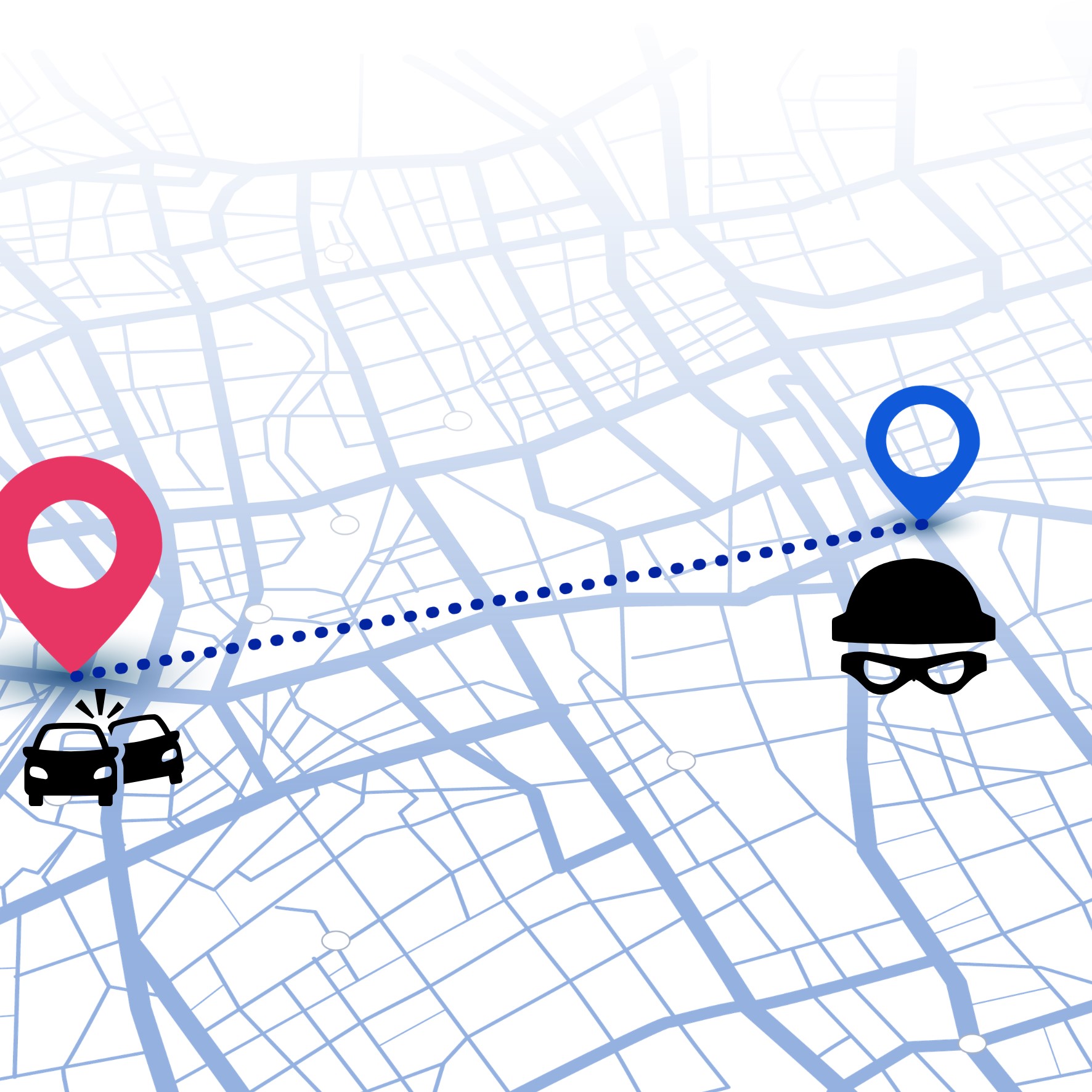
Las operaciones logísticas urbanas están expuestas a accidentes de tránsito e incidentes delictivos que pueden afectar la eficiencia del transporte y la seguridad operacional. Este trabajo propone un marco heurístico geométrico para incorporar estructuras de riesgo urbano dentro de un Problema de Ruteo de Vehículos con Capacidad (CVRP). La metodología integra registros georreferenciados de accidentes y robos, técnicas de agrupamiento espacial, análisis de empalmes, transformación de regiones irregulares en zonas circulares de riesgo y un mecanismo secante para evaluar la exposición de las rutas. Las zonas de riesgo se incorporan al modelo mediante una penalización multiplicativa que permite equilibrar costo y riesgo. La metodología fue evaluada utilizando datos reales de la ciudad de Irapuato, México, correspondientes al periodo 2020–2025 y una red de distribución de 97 clientes. Los resultados muestran que el enfoque propuesto identifica estructuras persistentes de conflicto urbano y las incorpora al proceso de optimización. El análisis de sensibilidad evidenció una reducción de los cruces por zonas de conflicto de seis a cero con un incremento moderado en la distancia recorrida. Los hallazgos demuestran la utilidad de la heurística propuesta para la planificación logística urbana sensible al riesgo.
Referencias
Sar, K., & Ghadimi, P. (2023). A systematic literature review of the vehicle routing problem in reverse logistics operations. Computers & Industrial Engineering, 177, 109011. https://doi.org/10.1016/j.cie.2023.109011
Dantzig, G. B., & Ramser, J. H. (1959). The Truck Dispatching Problem. In Management Science (Vol. 6, Issue 1, pp. 80–91). Institute for Operations Research and the Management Sciences (INFORMS). https://doi.org/10.1287/mnsc.6.1.80
Tang, J., Yu, Y., & Li, J. (2015). An exact algorithm for the multi-trip vehicle routing and scheduling problem of pickup and delivery of customers to the airport. https://doi.org/10.1016/j.tre.2014.11.001
Vidal, T., Battarra, M., Subramanian, A., & Erdogan, G. (2015). Hybrid metaheuristics for the clustered vehicle routing problem. Computers & Operations Research, 58, 87–99. http://dx.doi.org/10.1016/j.cor.2014.10.019.
Güner, A. R., Murat, A., & Chinnam, R. B. (2017). Dynamic routing for milk-run tours with time windows in stochastic time-dependent networks. Transportation Research Part E: Logistics and Transportation Review, 97, 251–267. https://doi:10.1016/j.tre.2016.10.014
Torres, F., Gendreau, M., & Rei, W. (2022). Crowdshipping: An open VRP variant with stochastic destinations. Transportation Research Part C Emerging Technologies, 140, 103677. https://doi.org/10.1016/j.trc.2022.103677
Wen, L., & Eglese, R. (2014). Minimum cost VRP with time-dependent speed data and congestion charge. Computers & Operations Research, 56, 41–50. https://doi.org/10.1016/j.cor.2014.10.007
Xiong, Y., & Li, X. (2024). The dynamic mechanism of tentative governance for emerging technologies: A case study of China’s new energy vehicle subsidy. In Journal of Cleaner Production (Vol. 484, p. 144328). Elsevier BV. https://doi.org/10.1016/j.jclepro.2024.144328
Haarstad, H., Rosales, R., & Shrestha, S. (2024). Freight logistics and the city. Urban Studies. Advance online publication. https://doi.org/10.1177/00420980231177265
Yang, Y., Chen, Y., Bai, Y., Liu, J., & Cheng, S. (2025). Mobility data uncover spillover impacts of freight activities on urban neighborhoods. Transportation Research Part D: Transport and Environment, 138, 103902. https://doi.org/10.1016/j.scs.2025.107032
Zhao, P., Li, Z., He, Z. et al. Reducing the road freight emissions through integrated strategy in the port cities. Nat Commun 16, 2563 (2025). https://doi.org/10.1038/s41467-025-57861-z
Espadaler-Clapés, J., Barmpounakis, E., & Geroliminis, N. (2023). Traffic congestion and noise emissions with detailed vehicle trajectories from UAVs. Transportation Research Part D: Transport and Environment, 118, 103822. https://doi.org/10.1016/j.trd.2023.103822
Fried, T., Tejada, C., Dennis-Bauer, S., Bolbaatar, O., Goodchild, A., Marshall, J. D., Olmedo, O., & García, L. (2026). Logistics of Zoning, Zoning for Logistics: Toward Healthy and Equitable Development for Urban Freight. Journal of the American Planning Association, 92(1), 15–32. https://doi.org/10.1080/01944363.2025.2515134
Ma, Y., Ampong, D.K. & Mészáros, F. Access restrictions in urban logistics: a systematic review of policy effectiveness and sustainability. Futur Bus J 11, 259 (2025). https://doi.org/10.1186/s43093-025-00675-8
Şahin, M. K., & Yaman, H. (2024). The vehicle routing problem with access restrictions. Transportation Science, 58(5), 1101–1120. https://doi.org/10.1287/trsc.2023.0261
Boriboonsomsin, K., Tanvir, S., & Barth, M. (2024). Modeling the impacts of low emission zone on route diversion and emissions of heavy-duty trucks: A Southern California case study. Transportation Research Record, 2678(1), 794–805. https://doi.org/10.1177/03611981231172747
Álvarez-Horcajo, J., Oliet-Villalba, J. M., Moreno-Saavedra, L. M., Carral, J. A., & Salcedo-Sanz, S. (2025). Optimal reassignment of green vehicles for improving last-mile delivery distribution in cities with low emissions zones. Cleaner Logistics and Supply Chain, 17, 100282. https://doi.org/10.1016/j.clscn.2025.100282
Bruglieri, M., Çatay, B., Keskin, M., Mancini, S., & Pisacane, O. (2025). The mixed-fleet vehicle routing problem with low emission zones. Transportation Research Part E: Logistics and Transportation Review, 201, Article 104230. https://doi.org/10.1016/j.tre.2025.104230
Barrera-Hernández, H., & Stevenson, M. (2025). Multilevel análisis of urban form and road safety: An application for developing-country cities. Latin American Transport Studies, 4, 100053. https://doi.org/10.1016/j.latran.2026.100053
Rodríguez, S., Corzo-Forero, J., Guerrero-Guevara, L. F., León-Prieto, C., & Rodríguez-Jaime, M. F. (2026). Profile of Bogotá: Urban dynamics, transportation, and mobility challenges in a Latin American city. Latin American Transport Studies, 4, 100059. https://doi.org/10.1016/j.latran.2026.100059
Román-Cedillo, D., & Bautista-Hernández, D. A. (2026). Transportation systems in Mexico: Challenges and trends. Latin American Transport Studies, 4, 100060. https://doi.org/10.1016/j.latran.2026.100060
Arellano-Avelar, M., Medina, M. G., Martínez-Abarca, J., & Preciado-Caballero, N. (2025). Contaminación auditiva por autobuses de tránsito rápido. Entropía y neguentropía en la metrópoli de Guadalajara, México. CG Ciudad Glocal Revista Científica Mexicana de Movilidad Urbana, Transporte y Territorio. 1. https://doi.org/10.65937/ciudadglocal.2025.4.v1.n1
Tiwari, A., Singhal, B., Aditya, A., Tiwari, A., Jain, S., Mukherjee, D., & Mukherjee, D. (2023). A unified geospatial clustering framework to identify varying density clusters in e-commerce logistics. Proceedings of the AAAI Conference on Artificial Intelligence. https://doi.org/10.1609/aaai.v40i47.41488
Zhang, M. (2022). Weighted clustering ensemble: A review. Pattern Recognition, 124, 108428. https://doi.org/10.1016/j.patcog.2021.108428
Zhang, X., Jia, Y., Song, M., & Wang, R. (2025). Similarity and dissimilarity guided co-association matrix construction for ensemble clustering. IEEE Transactions on Knowledge and Data Engineering, 37(11), 6694–6707. https://doi.org/10.1109/CEEICT.2018.8628138
Tu, X., Fu, C., Huang, A., Chen, H., & Ding, X. (2022). DBSCAN spatial clustering analysis of urban production–living–ecological space based on POI data. International Journal of Environmental Research and Public Health, 19(9), 5153. https://doi.org/10.3390/ijerph19095153
Khan, M. M. R., Siddique, M. A. B., Arif, R. B., & Oishe, M. R. (2018). ADBSCAN: Adaptive density-based spatial clustering of applications with noise for identifying clusters with varying densities. In Proceedings of the 4th IEEE International Conference on Electrical Engineering and Information & Communication Technology (iCEEiCT 2018).